Showing posts with label perspective. Show all posts

Monday, May 2, 2016

Dehydration

Another weekend full of writing. Remember how I said
it feels like I'm not digging down deeply enough into my own flesh to write it
? Yeah, I don't feel that way anymore. I bled. It was terrible. I wrote a HALP-type email to a friend, and she conjured up the image of Spongebob and Patrick under the drying lights at Shell City


and yes, that was exactly how I felt at the end of it. I drank some whiskey and played Spider and felt better, but I do not want to write this story again.

I'm going back to it either tomorrow or next weekend to add another short section and assemble it properly, and I think I'll be assembling with scissors and tape. The sections don't go together as I wrote them, and as of yet I don't know exactly how they will.

A talk with Matt yesterday forced me to confront the fact that I'm not sure this piece has an audience beyond the professor who challenged me to write it and maybe two other friends. I don't like the idea of putting my name on it in the public sphere, and Matt likes that idea even less (not because he's interested in censoring me, but because he loves me and doesn't want people picking on me).

I don't really know what to do about this, because I have never been much afraid of revealing personal stuff about myself in the past, but this thing - this subject - it's truly frightening for me. And what I wrote goes beyond me to people I love, which isn't fair to them. (I'm sorry to be vague, but that is the nature of the few subjects I'm afraid to talk about: I don't end up talking about them.) There may be a time for me to revisit this piece as something publishable, or it may be something I can send out anonymously, but in the state it's in, I can't imagine strangers knowing it was me who wrote it.

This is the first time I've ever been in this position. I try to be a warrior on the page. It feels weird to be so profoundly uncertain. I'm uncertain all the time about whether this is better than that or whether I'm doing writing the right way, but to be uncertain about whether it was a good idea to write this thing at all? That's new.

I have half a dozen other things to write - a piece about aging, revisions on the secret project, an academic paper that is little more than an attempt to go to Hawaii, at least one application for a fellowship, an idea that's not fully developed yet but that could be interesting if it doesn't turn out to make me look absurdly arrogant. I wrote a poem the other day, too. I think the transition into summer, and shifting all my brewing energy toward things other than school, may have begun.

In other news, I'm reading this book called I Hate the Internet, because the author is coming to my class tomorrow to talk about a different book and I wanted to read this one before I met him. It's misanthropic and hilarious and cleverly structured and I'm enjoying it. But I don't think it's a book for everybody. I haven't figured out whether its negativity is working for me or actually not working for me, whether or not it's other stuff in the book that is making me like it rather than its overwhelming cynicism.

In other other news, I filled out an application for graduation (with my M.A.) in spring of 2017. A plethora of things could happen between now and then that would push my graduation back to fall '17 or spring '18, but I think I can make it. It's kind of scary, because I don't know what will happen after that. But I also can't wait to see what happens after that.

Wednesday, April 22, 2015

Precision v. Grace, Classical v. Jazz (or The Great Oz Has Spoken)

Last week I sort of unintentionally reread some feedback a professor gave me about a year ago.
While this piece feels done, it’s felt done from the beginning, and done in a way that, as impressive as the writing is, feels like there’s a cap on, holding everything together deliberately and tightly. I know this is what most writers aspire to, at least for a while. And then there’s the next stage, which involves letting go of all that tight control to dig deeper, to burrow, to be surprised. I think I already said this, and if not, shame on me. But really, if you can write this well, Katharine, imagine how well you might write if you were really writing. And by that I mean working the language intransitively, not acting upon but acting – not writing about (the self), but writing (the self). You clearly have all the craft skills you need to stop thinking so clearly in meaning. 
This feedback confused me. Even after I achieved some distance and met with the professor, the way forward did not come clearer. (I still didn't understand it particularly well in rereading last week.) But I set it up in the back of my mind, kind of like a canvas backdrop, while I went on and wrote to the best of my ability.

I blogged last fall about how much despair ensued when another professor unknowingly echoed what the first one had said. The backdrop rippled a little, starting to appear more realistic and less like scenery, but I still didn't know what to do with it.

This blog post does not tidily conclude with me figuring it out.

Monday, June 24, 2013

How to Read the Same Thing Twice

Three weeks ago I read a 1963 book called The Story of the Misfits by James Goode. (The Misfits in this case being the 1961 film starring Clark Gable, Marilyn Monroe, and Montgomery Clift.


Not the punk band, 


nor the rival band


of Jem and the Holograms.) The book was more or less a production diary of the overlong, over-budget shoot that resulted in one of the oddest letdowns of that period in cinema. I don't know what I was hoping for from this book; more dirt and gossip, maybe, or a clearer window into the potent personalities involved in the film (John Huston directed and Arthur Miller wrote the screenplay) and how they bounced off one another. Whatever I wanted, I didn't get it.

Throughout the parts of the book that involved Marilyn, I kept having the feeling that this wasn't like I remembered it. No, I wasn't there - my mom turned two that year - but I was recalling the stories of these events from my main source for Marilyn inspiration and knowledge: Donald Spoto's exhaustive biography of her. It presents a whole woman, flaws and all, and offers carefully sourced versions of events in her life that aren't in many other books about her.* After finishing Goode's book, I reread the sections of the Spoto book involving The Misfits, and I was amazed at how different a picture was painted.

For example, Goode's book mentioned from time to time that John Huston was doing a lot of gambling throughout the picture's lengthy location shoot in Reno. If you asked me what Goode intended to convey by talking about this, it would be that Huston had a man's habits and a fool's luck at the gambling table, but boys will be boys. Something Goode failed to mention but Spoto pointed out was that Huston was gambling with the production money. Tens of thousands of (1960) dollars of it. Which he had to call around to Hollywood friends to try and replace before the shoot ended. I don't think that Goode's book tried to pin all the production problems on Marilyn instead, but it lovingly described her huge entourage of assistants and groomers and repeatedly brought up how her lateness made things more difficult and expensive.**

The Spoto biography also put into perspective that Arthur Miller continued to alter Marilyn's role in The Misfits as their marriage situation got worse and worse, twisting Roslyn into a character with less integrity and more flooziness, more of a soft female foil to Clark Gable's incontrovertible masculinity, as the shoot wore on and on. Goode did record that scenes were being rewritten all the time, but didn't mention any character shifts (not that he had access to such subtleties; if he even saw that Marilyn and Arthur's marriage was failing, he didn't say anything). He also spent a lot of time quoting Miller, who sounded to me like a pompous, conceited sourpuss, but I can see how you would mistake that for intellectual giantism if that's what you expect.

Spoto takes every opportunity to sympathize and empathize with Marilyn, to show the reader the events from her point of view. I appreciated this enormously when I first read the biography, because I felt like I'd sat and talked to Marilyn herself for the length of the book, rather than reading about her at a remove. However, next to Goode's reportage, the style seemed downright simpering, as if Spoto was overly interested in making her sympathetic rather than serving the facts. I always felt that his biography was pretty neutral, not fawning, as he doesn't hesitate to talk about her mistakes and how her character failed her. But I no longer had that sense when reading about the same events from a different point of view.

All this is to say: I am astonished at how wildly disparate the same events - sometimes the same actual quotes coming out of the same person's mouth! - seem in different hands, in different contexts, with different attitudes. This long but fascinating article, which is about this very issue applied to a John Belushi biography authored by Bob Woodward, demonstrates this particularly well.

It's also the very thing I plan to get at in the wikibook. (I think I'm too ambitious about theme in this project, because I also want to get at how life on the internet works on people.) The central purpose is to write about how the real version of events, when the participants aren't talking or can't be trusted or all tell different stories, can never truly be known. How our perception of events determines what we consider the actual nature of those events when we are reading about them; how the unbiased reporter can (unwittingly?) become the biased storyteller. Rashomon, sort of, but with more petty arguments between Wikipedia editors.

So not that different at all, really

I'm trying to write a little on it every day, in no hurry at all. I expect this book will take me in the years rather than in the months. It's a much more meticulous, cerebral project than any of the book-length work I've done before. Last week went okay with it, but all spring I've been much more adept at avoiding it than writing on it.

In case you're interested, I was inspired by the death of Jean Harlow's second husband, Paul Bern. He probably killed himself, but we'll never really know.

---
*She never slept with Robert Kennedy. She probably slept with JFK once. She died due to gross negligence over drug dosages/combinations on the part of her doctor, Ralph Greenson, not because she overdosed on purpose or the Mafia killed her or whatever. Stuff like that. I tend to believe Spoto's versions of these disputed events, because he clearly spent more time on Marilyn than most of her other biographers did. 

**For those of you who don't know much about Marilyn Monroe, she was pretty much always late for casting calls in the last years of her career, sometimes by a matter of several hours. I.e. if shooting was supposed to start at 10 AM, she might not show up until 1 PM, with no explanation. Spoto indicates that she was insecure and suffered from atrocious stage fright, and her lateness resulted from not being emotionally ready to perform. She also had serious sleep problems throughout her whole life, which meant that in the morning she sometimes had trouble shaking off the sleeping pills she took. 

Monday, February 18, 2013

We Need to Talk About Carl

You know, last week, on an evening before bed, I was thinking about something lousy that happened to me years ago. A circumstance that I got into back in 2004 or thereabouts due to trusting the wrong people, to my own frailties, and to the deft hacking skills of the jealous best friend of my boyfriend at the time. I know that sounds like a soap opera plot, but it really happened, and it caused me and people I cared about a lot of grief. Something I'd known (although not as certainly as I would come to know it) about the best friend - let's call him Carl - was that he'd do anything at all to reach his own ends, no matter what those ends were. Ethics, or the feelings of others, were not really his thing.

When my e-mail was hacked into and used against me, in a way that was indefensible except for that hoary old exception to the libel rule - it ain't defamation if it's true - my boyfriend at the time said a phrase I'll never forget. He told Carl to back off, that this hacking thing was over and done with, and that "she's a private citizen now."

The phrase communicated that Carl was to leave me be, not to treat my personal accounts as public property, not to use his skills to try and root me out of his best friend's life at whatever cost, like a rotted tooth. I don't know why it wasn't enough to tell Carl that you don't treat anyone like that, or why Carl never learned this in the first place.

I was thinking about this the other night before sleep for reasons I know not, except that I'm sort of always grateful under the skin of my everyday life that Carl isn't watching me anymore. Or so I think, and hope. So I prayed (in my way), the other night.

On the Internet, few of us are really private citizens. All of us, from me to Cory Doctorow, purposefully draw our own spheres of public citizenship, whether it's communicating to an intimate circle of friends or a huge group of fans or the entire fucking world. It has occurred to me, when I think about my big castle-in-the-air dreams for my writing, that all the people I've wished to leave behind throughout my life - Carl being numero uno - could potentially see my name and know something further about me than I want them to know, should I find success. It is not a pleasant thought.

I write this blog under my own name anyway, and I try to write work that will appeal to a wide audience anyway. Carl knowing that I continue to exist is collateral damage for the kind of exposure and writing career that I dream about in my more foolish moments. And the positive aspects of not attaining that kind of exposure and career are more plain to me when I think about Carl and similar people I knew in 2004.

Of course, part of what I was wondering when I thought about him the other night was whether he ever did come to consider me a private citizen. After the boyfriend was out of my life, did he continue to keep tabs on me anyway? I don't know why he would, but I don't know why he went to such dishonest and harmful lengths to ruin my relationship, either. Could he log into my Facebook account at will today, if he chose to? Is he reading these words? Is he aware of exactly whom I'm referring to?

Carl is my devil. The person to whom I attribute all the woe and unhappiness that befalls me. He whispered into the UPS driver's ear to make sure my mother's birthday chocolates arrived late. He inspired dozens of people to collude toward a traffic backup that kept me from seeing Matthew Inman in Santa Monica. In some form, he is every insecure thought that keeps me from going further into life, because all he's going to do is dog my steps and spread false information about me and sit in the shadows to record all my worst moments.

He is my stalker. My troll. And he is absolutely irrelevant to my actual life.

Thursday, January 10, 2013

92 Reasons I Won't Recommend This Book

Is this song cheesy or comforting to the heart? I love it, but the internet has said that it sounds like a song from the credits of a third-rate 80s movie.


I think I've written 10,000 words on KUFC this week. Not shabby. I would have written more if I could stop fiddling with the last two scenes that I typed up (dammit). I keep remembering things like "if she was eating grapes she'd have to spit out the seeds, no seedless grapes in 1940" and "wait, I have to point out that there were grapes on the coffee table in the first place" and "she forgot to put her coat back on before she went outside" and such. It's stupid little stuff, consistencies and anachronisms, but it's the kind of stuff I'm afraid I'll forget entirely if I don't put it in (which simultaneously feels too irrelevant to take notes about).

Also, the book is becoming much queerer than I intended it to be. My MC is bisexual, which was part of the plan all along, but it's turning out that there are more homosexual scenes/couples in the book than hetero ones. I think this is hunky-dory, but since this just happened, I'm slightly worried that I'll scare off publishers the same way Soderbergh scared off distributors. (Best comment I heard on that nonsense: "Now I'm just curious...how gay is this thing?") Ah well. Now is not the time to worry about that. And anyway genre fiction needs more healthy queerness and fewer spider-queens with eight boobs.

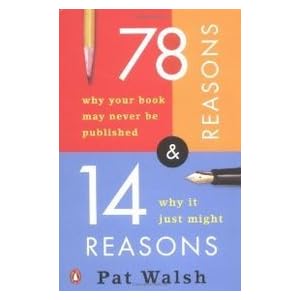
Speaking of scary monsters, I am reading this book:


And I think it will be the last advice book about the publishing industry that I read, unless I am recommended one after a serious, thoughtful conversation. I've read ten or so, all told, and a plethora of publishing advice on the internet. They always have the same effect. They make me insecure and arrogant in equal measures (i.e. "oh God, I'm not doing that, I'm not thinking about that, I'm a horrible writer, I'm dooooomed" intertwined with "I totally knew that, I'm brilliant, I'm way better than the herd, I'm gonna be a millionaire"), sometimes in the course of a single sentence. They get me spun up and competitive about who could be in the slush pile with me, and force me to obsess over why the process has to be so fraught and lottery-like. They make me angry because they contradict each other and themselves, sometimes in two neighboring paragraphs, as this one did. And because they codify everything about the process of publishing into secret handshakes that differ from book to book, indicating that the codification is thoroughly variable and meaningless.

To sum up: they keep me from doing good work. They take my focus off the book and onto myself and my ego, whether inflated or punctured. They advise less than they obfuscate. So I'm finished. Me and my perfectionism would rather do everything the exactly-right way to increase my chances of acceptance, but if I've learned anything at all from these fussy, confounding books, it's that the only part of the process that doesn't vary from house to house and agent to agent is do good work. (And tell the truth, but I've got that one down.) So fuck it. I'm just gonna do my best, and make the book part of that best, rather than merely my forward foot.

I note that this book, 78 Reasons etc., is apparently out of print. I'm not surprised, because the author's advice on self-publishing is no longer correct in the slightest and he doesn't mention e-books once. (It's from 2005.) However, its advice is otherwise no different than most of the other books I've read about writing and publishing. It's no outlier on the bad end. It's just as irritating and distracting as all the rest.

FWIW, I liked Self-Editing for Fiction Writers - it supplied practical, applicable advice to someone who abhors revision - and I liked The Fire in Fiction, although I suspect the latter was good because Maass is just a good writer. But, you know, those are craft books, not publishing books. Both invoked the carrot of "you want to be published, don't you?", but neither was specifically about how to get into print.

Okay. Rant over.

I'm trying very hard to do less Facebook lately, and it is a serious challenge. It's difficult on a minute-by-minute basis. And it makes me feel amazingly isolated. But I can also feel my life cracking open to let other things in: old habits, new uses for time. So...yay?

Monday, October 1, 2012

The Power of Three

Saturday morning I saw The Master at a matinee. I have watched P.T. Anderson's career with great interest since the turn of the century, and I hoped for more from him than was delivered to me with this one. Tempted as I am to turn this blog into a film rant outlet for me from time to time, it's not really why I write here, so I won't go into the movie in much detail. (Although I went into it at probably too much length after my friend kamper issued a perfectly innocent and general "What did you think?" on his blog. Spoilers there.)

One of the things that's still nagging at me about this movie occurred in the very last few moments. I'm definitely going to misquote this, so I'm sorry. The titular master says to his disciple, "If, in your travels, you discover a way to answer to no master, no master of any kind, will you please let us know of it? Because you will be the first man in the history of the species to do so."*

This got me thinking about the masters to which we all answer. This is more literal for some people than for others: most of us are employed by someone, some of us are tethered to manipulative or tyrannical people, some of us are devoted to a higher power. But it also reminded me of two other messages that have given me profound food for thought in the recent past.

The first chronologically is DFW's. His "This Is Water" has hardly once left my mind since I read it this spring. This link takes you to the abridged version at the WSJ, and this link takes you to the published book version, which I wish I was rich enough to buy for everyone I know. Here are part one and part two of the actual speech given by the actual DFW. It's not as polished as the final version, but it is, after all, the man himself.

I wrote about this speech a little bit previously, tying it to purpose both in life and in writing. But the echoes of his ideas - that there is no genuine atheism, that everyone chooses something to worship, and that choosing unwisely "will eat you alive" - have only gotten louder since that time, and have touched untold segments of my life. They are ideas I've mentally breathed, their essence reaching into the lowest and highest little lobes and crannies of my brain. I have decided to think hard and choose wisely, and, just as he says, it's a daily process. Minute-by-minute, even.

The second is Stephen Colbert. He gave a commencement speech to Northwestern last year, and it's pretty damn good. (I've seen better in terms of organization, but his credentials are improv, not stand-up.) He gave the speech as himself, not his character; it's still funny, but it's not high on satire. The heart of the speech is at the end, when he [mostly] sets aside jokes. If you don't have time to watch the whole thing, go to 15:25 and watch the rest; that's only five minutes.


The you-can't-win-at-life thing is so, so cool. I wish someone had properly explained to me when I was young that adults, who seem to have it all put together, are totally just making shit up from day to day and year to year. I would have been a lot less intimidated about growing up.

The point, though, is that Stephen has this to say:
In my experience, you will truly serve only what you love. Because service is love made visible. If you love friends, you will serve your friends. If you love community, you will serve your community. If you love money, you will serve your money. And if you love only yourself, you will serve only yourself, and you will have only yourself. 
I watched this last week and it got me to wondering what I serve. Then, I saw The Master, where nearly the same question was set out. That was the third time this message and question have been presented to me this year. Humans like the number three, is the way Matt put it to me once when I was being highfalutin' about how I style my written sentences, and it did not escape me even as I was sitting there watching the movie that I was hearing this, that this was impacting my personal atmosphere and shaking up the dust, for the third time.

I thought about it for a while and the only proper answers I could come up with to the question of what I serve were "truth", "compassion", and "art". Those are the things I value most deeply, when I really strip away everything else.

"Art" was also the answer I gave to the question of who my master is. This answer has spun off a whole new way of thinking about why I write and what I want to achieve when writing, a way I have barely even approached before. It soothes and calms the impatience and jealousy that have dogged me when I think about what I want to accomplish. Because giving a name to what I worship/my master/what I serve seems far more permanent and less empty than the wish to tot up money and awards, the desire to check those things off the list and to breathe easy about at least I've got that settled. I can't even number the novelists who've said in interviews that publishing a book isn't nearly as satisfying as s/he expected, and that it rid her/him of virtually none of her/his uncertainty. If that's true, is there ever any certainty to be found, even when blessed with financial security and critical praise? (Martha Graham says emphatically no. And I think she'd know.)

If I'm not being too premature, I think this is how you stop writing with the monkey on your back - how you stop worrying about rejection and the whims of the market. You just serve what you love. You step back to the wider, this-is-water view and you think only about the master - in my case, the art. And when you send something out, you hope for the best; you hope that the market serves the work (the art, the master), and also, if possible, the other way around.

Wow. Let's hear it for the power of three, eh?

*(Might as well make a definite misquote artful, right?) 

Sunday, September 23, 2012

The Dim Star

Before I get going - yesterday I blazed through Alison Bechdel's Are You My Mother? in about four hours. I know there are people who read this blog who have challenging mothers, and if you're one of them, get yourself to the library and put your paws on this book. I admit bias, because her Fun Home is in my top ten favorite books ever. But really. Read it. Epiphanies await you inside. (And don't listen to this sexist asshat.)

All right, so, today's subject. Remember how I said I went to the beach in part to see if I could make some biggish writing decisions? The one that was troubling me the most was which book to buckle down on: the [non-]horror novel or the KUFC book. For one or the other, I need to set a deadline and commit to it and get to work.

I could reproduce for you the dithering I was doing over these two projects, but I do not think it would make good reading. In short: the most significant attraction for the [non-]horror novel was an agent telling me it's an extremely saleable idea and she wants to see a rewrite if I do one, and the most significant attraction for the KUFC book was a heady and totally new blend of confidence and organization. The most sig. negative for the [non-]horror novel was having to write from scratch a book I'd already written and am a bit sick of, and the most sig. neg. for the KUFC book was fear (creeping terror, in truth) that I'd get to the end and be similarly fucked.

Trust me that there were many more things to consider and I've rifled them all.

Mid-last week I was so tired of worrying about it and wanted so much just to write that I opened up KUFC and started writing. I'd only gotten to about 9,000 words on it, which is really very little, before setting it aside. Last week I added 4,000. After my third day of work on it, I guessed that my decision was made.

Thursday, September 13, 2012

They Simply Dig

My friend Dave, who is a visual artist and much, much wiser about the creative process than I am, posted a video of Louis CK talking a bit about his creative maturation on my Facebook wall a couple of weeks ago. I think I had previously conflated Louis CK with some vulgar-for-the-sake-of-vulgar comedian I don't like, or maybe I had just seen an act of his that was over the line for me, but anyway I had him in my head as a person whose work I had little interest in. He's started to get a lot more attention among my circles in the last few years, but I never investigated. And I waited a day or so before I watched this video. Don't make the same mistake I did; watch this now. I know it's 10 minutes long, but watch it.


After I saw this, I knew I had to blog about it. Because this is a central worry for me, that at some point I'll have used up all my ideas and be left with nothing. So I keep believing in trunk stories, fiddling with them and polishing them and sending them out, instead of writing new stories.

This is wrong. This is the complete wrong thing to do. The only way to do work is to do reams of it, to write and perform an entirely new comedy special every year, to dig deeper and deeper and deeper until you're sure there's nothing left. That's when you find your best stuff, the stuff that distinguishes you from the eight zillion other comedians out there, and that's when you go forward.

I know exactly how lost and resentful and terrified Louis CK felt when faced with Carlin's process. The old stuff, the fifteen-year-old jokes, it all feels so valuable. I clutch the old stories to me with sheer panic at the idea that they're disposable. They felt like the best I can do, and how can I just throw out the best of me?

But creative work has to be disposable for it to get better, and the best I can do is way, way ahead of me. That's the lesson I'm assembling this year. Even if it's a lesson some of you reading this learned long ago, and you think me very silly and creatively immature for just getting it now, you've got to be patient and understand that it's a total head-spinning epiphany for me. I have to trash everything before I can unearth what I really have to say. There's a reason Louis CK just kept getting bigger and bigger - he was getting better and better, along with doing his own stuff more and more strongly instead of jokes that could be anybody's jokes.

And the thing I've been repeating like a mantra, as if I can make myself believe it if I repeat it enough times, is that you can't use up all your ideas. That human life is so rich and so wide that even if I thought I'd put everything I had into one story, I can put everything I have into another story I write next year and it'll be completely different. And not only that, you can still mine the same thing in innumerable ways. Tiny Beautiful Things, heck, Strayed's entire career, is proof of that. Very little that she's written has not looped back to her mother somehow, and yet it's all worth reading.

Those trunk stories? Sure, they've been polished to a high shine, but they're only copper. The gold is still ahead. That's what you get when you dig deeper.

Thursday, July 5, 2012

The Closer I Am

My KUFC manuscript is currently the length of a short story. [waves small flag with WOO! written on it, glum expression on face] I think I'm doing good things. I think it's going to be something I can be proud of. I think. It's just going so goddamn slow, and hard. I desperately want to share pieces of it with others, but I know that's a very stupid thing to do until I have a full MS. Which could take forever, at this pace.

But today I want to talk about something else.


There's been a slow dawning in me over the past, uh, mumble (because it just takes embarrassingly long for me to get a clue), brought finally to a head by this article and this article. This slo-mo epiphany has finally peaked at the point where I have convictions about my lifestyle that I can support and defend.

The first article is a thoroughly pleasant and fun read, and posits a philosophy that I couldn't believe in more strongly if it was a religion.
On the best ordinary days of my life, I write in the morning, go for a long bike ride and run errands in the afternoon, and in the evening I see friends, read or watch a movie. This, it seems to me, is a sane and pleasant pace for a day. 
[snip] 
Idleness is not just a vacation, an indulgence or a vice; it is as indispensable to the brain as vitamin D is to the body, and deprived of it we suffer a mental affliction as disfiguring as rickets.
The second article is a little more difficult to read. It's Harper's all the way - kinda over-intellectual and snooty and unenticing, and written so that reading it in Bette Davis's voice would enhance it. But I urge you to read it, read the whole thing. There are wonderful thoughts within.
Sometimes, I want to say, money costs too much. And at the beginning of the millennium, in this country, the cost of money is well on the way to bankrupting us. We’re impoverishing ourselves, our families, our communities – and yet we can’t stop our­selves. Worse, we don’t want to.
[snip]
It is this willingness to hand over our lives [to work] that fascinates and appalls me. There’s such a lovely perversity to it; it’s so wonderfully counterintuitive, so very Christian: You must empty your pockets, turn them inside out, and spill out your wife and your son, the pets you hardly knew, and the days you sim­ply missed altogether watching the sunlight fade on the bricks across the way. You must hand over the rainy afternoons, the light on the grass, the moments of play and of simply being. You must give it up, all of it, and by your example teach your children to do the same, and then – because even this is not enough – you must train yourself to believe that this outsourcing of your life is both natural and good. But even so, your soul will not be saved.
Toward the end of his essay, the author turns to reflect upon George W. Bush in a way that strikes me, eight years after its publication, as...immature? Inconsiderate? Overly ranty? I'm not really sure, but even though I didn't much disagree with his points about Bush, it soured the piece. So, fair warning. So much intense yesyesyes comes before that whole Bush section that I still recommend the piece wholeheartedly.

Anyhow. I realized the other day that the worst thing that could happen if I worked a little less, and took a little more time for reading and movies and sitting outside on my patio to watch the hummingbirds, was that I wouldn't pay off my credit card debt particularly fast. That's it. That's the catastrophe. We are living pretty well within our means at this point, so although more money would be nice, I've discovered -

I am not trading money for time anymore.

Time is more precious. A lot of people would agree with that automatically without thinking about what it may mean in their lives. There are lots of people who can't afford to make the choice between the two, of course - minimum wagers, single mothers, etc etc. But there's a big ol' swath of the population who probably have the means to choose: who could work one less day a week, or drop back to half hours, or even get a different job. But they don't. Money matters more. Partly because they've been convinced by this culture, on a daily basis, that it does.

I'm not going to get all evangelical about this and claim that everyone must agree the life of a loafer is a superior life, that it should be our ultimate goal as a society. There are all sorts of people who are suited to all sorts of lives. The thing I'm trying to say is that the sort of life which I prefer, and the sort of life to which I'm suited, is a slower-paced and less work-focused life. Not a life you can live in America without askance judgement and the pervasive feeling that You're Doing It Wrong.

But I'm doing it right. I'm doing it right for me. It is so hard to come to this conclusion! It's been serious effort, through inadequacy and despair and all manner of therapy-needing emotions, to figure out that a life with enough space for idleness is not only a choice that it's possible to make, but that I can be healthier and happier than I could ever have imagined if I have the guts to go on and live that way. Guts which I've finally accessed.

Hence, I'm not gunning for a better job (except as a novelist). I'm not longing for more security. I'm even content with our smallish apartment in an unglamorous neighborhood. Because around 2:00, I'm finished with my work for the day. For the rest of the hours before dinner, I write paragraph after paragraph of fiction that I love and believe in. Or I take a walk and feel the sun. Or I just fiddle on the internet, or watch Mary Tyler Moore. Doing some of those things every day is more important to me than virtually anything else except the people I love. And I'm not going to hide from that anymore. I'm not going to be ashamed, or consider myself freakish or disappointing.

It is okay to choose not to be busy. It's okay to walk away from the money church. I swear, nothing horrible will happen, no one will spit on you or eat your brains. Such a life may not be for you - that's something you have to learn for yourself, knowing who you are - but it's a legitimate, possible potential choice, much as it may not seem to be.

Disclaimer: If this post sounded too self-satisfied, or too WOW THIS OBVIOUS THING IS TOTALLY AMAZING, I apologize, but there are no refunds. See you in the park, or at the movies.

Monday, July 2, 2012

Background Effort

Friday night I wrote a few hundred words, and got stuck on the name of a fictional government program which I couldn't manage to invent. Matt and I went out to dinner* and I complained a lot, at first about not being able to find a rhythm when I'm still in the thick of inventing a world I don't yet know that much about. I hadn't even figured out which decade I wanted to set this in, for example, and although I don't think a lot of detail like that is going to be mentioned specifically by characters or narrator, I still need to know it. I didn't know whether I should try to outline beforehand and then write, or whether I should write with big gaps and then go back to rewrite later, or whether to write a few sentences, stop what I was doing to make world-building notes, and then try to get back in the feel of what I was writing.

None of these seemed like a very good idea to me. I loathe outlining. In the past, it's stifled and stymied me, and it always feels like wasted work. Stuff that's going to be thrown out later. But writing with gaps sounded like I'd wind up with an incoherent voice and muddled themes, and writing in herks and jerks sounded like a terrible experience likely resulting in poor work. Between them, outlining and note-taking first seemed like the best answer. But OH I did not want to.

Matt, who has a paying creative job, told me (in the kindest, gentlest terms) that I needed to be more realistic about the problem of doing work that was going to be thrown out. He said that in his job, probably 75% of what he comes up with - beyond spitballing; like stuff that he works on for days or weeks, and fully creates, and is usable - is thrown away and never used. Ow, I thought. He insisted that what was remade instead was better work, and the previous work being lost was something he got used to over time.

Other friends have tried to tell me that outlining, and previous drafts, and pages of notes that end up not fitting in to your work, are not wasted. My friend Dave, a visual artist, told me that it took him a long time to iron out how he felt about doing practice drawings. He said he had to "learn how to be OK with things that weren't great", a phrase that really resonated with me. Instead of seeing gesture drawings as earlier versions of something better and more complete, he began to see them as self-contained things.

I remember being in a writing course at a community college some years ago where we were assigned to write a little self-contained scene. There were instructions for the scene that I can't remember now, but I hazily suspect that the purpose of the exercise was partly for our practice, but mostly for the instructor to get an idea of our abilities. I wrote a scene about a woman in a convertible that was falling off a cliff. I still remember a detail I wrote about the song she had in her head. I did something between tossing off and doing my best on that scene, seeing it as an assignment for which I had to meet expectations, but not as something I'd ever integrate into other work. It didn't have to be a sonnet, but it did have to have some rhyme and meter, so I wrote appropriately.

It wouldn't harm me if that scene got snapped up by the black hole of the universe and I never saw it again, and it doesn't bother me that I spent an hour or so on it. It served its purpose.

I'll endeavor to see outlining and notes the same way. I just feel so inadequate and silly when I look back at notes that I made prior to the last finished project and see that I forgot the spirit of half of them and didn't use most of the rest to inform the project. It feels wasted. But it's not, it's just background effort that gets my head in the right place to set forward the best and most integrated effort I have.

My resistance reminds me a lot of my pack-rat instincts. Nothing can be lost! No creation can ever be discarded or forgotten. It all has worth and value. I think part of what Dave was trying to tell me was that the worth and value is in his sketches' very discardability, that he can practice with them and then throw them away, and the intangible benefit of having done the work (and also having been able to let the work GO) is what he gains, not the tangible benefit of the drawing's existence.

In any case, last night I did some outlining that led to some freewriting that led to some amazingly awesome ideas for this book. Ideas which I doubt I would have come up with if I'd kept floundering along in Chapter 1. So I have a little egg on my face there. Maybe I'll alternate nights with writing and note-taking. (The idea of actual outlining, with the high-school format of I. A. 1. a. etc., makes me shudder, so I'm planning to just kind of...freewrite a lot.)

By the way, Matt recommended that I look at Jim Butcher's blog for suggestions about how to put a book together. I've just skimmed it so far, but Matt's right - there's a wealth of information on that blog. It's here. Some of what Butcher talks about is stuff that I tend to feel my way through - either like a natural or like a moron, depending on your point of view - but if you feel helpless before the maw of Story Cthulhu, it sure looks like a life raft to me.

And Finally, I made a small pinboard over the weekend of inspiring images to put next to my computer, and it makes me very happy to look at the collage of it. I hope to make it a rotating series of pictures, rather than the same ones all the time the way my previous near-desk collages have been. If I leave them up forever, the pictures lose their power. I thought it might be fun to put one of those images into my blog every now and then and say a bit about it.

This is Marlene Dietrich, whom I think may have had the best legs in the history of legs. (She's photographed here by Milton Greene, who also took some of the most famous pictures of Marilyn Monroe.) The vague texture of the background next to the sharp texture of her hair, and the movement in her left hand as she pulls up her stocking, are only a few reasons why I love this picture: I also love the little wavepoint in her shoe, and the fact that you don't see her face but you know that this is a woman of world-changing charisma. And the unbelievable length and lines and curves of her gams. She's never been one of my favorite stars, but this is definitely one of my favorite pictures.


*In fact, we went to Black Angus. I'd never seen a Black Angus on the East Coast, and knew it only from a scene in The Simpsons wherein Bart mercilessly insults the joint, leading Matt and me both to a) hear that scene in our heads every time we drove by, and b) wonder what the food would be like there. I was a bit gleeful to have the opportunity, but disappointed to find it was neither particularly bad nor particularly good. Decent Sysco food. 

Friday, June 29, 2012

PHEW

I don't know how it is for other writers, but every time I take a long hiatus from doing fiction, I always have this little needling worry that when I decide to write again, the machine will be broken, and somehow words won't come out when I put my fingers on the keys. It's a relief when the machine chunka-chunka-CATCHes back up again, coughcoughSPUTTER, and the words come.

Last night I wrote my prologue. Just shy of 2,000 words, and I wrote it good, in words I'm proud of.
The ache in me won’t subside. Couldn’t Racchi have been kind? To betray once, and then twice, and for it to have cost him nothing, encourages a cool voice to say that I’d been wrong about him all along. That there is no taming a thaiad, even a half-blood, and he was just a chimpanzee trussed up in evening clothes of my manufacture. He’d still screech and mess himself. Nothing but an animal.
But then, perhaps the same is true of me.
I decided semi-firmly to write this one in first person. I've stayed away from first person in the last few years, for the most part. Most of my juvenilia is in first person, and I tend to get lazy when I write in it. I make my character a lot more like me than like herself (or himself), and I do a lot of asides and emotional explaining, and the whole thing gets to be a lot more like a blog post than a work of fiction. So it'll be a disciplinary exercise to write this in first person and not do all of that.

One of the ways I got around this problem in the past was by writing shifting first-person for my sci-fi novella. I had a genuine purpose to the three characters I chose to rotate - they all had very different things to contribute to the story, and they shared a particular fate that took place at the end - but when I read over it the last time, I agreed with one of my beta readers that shifting between the characters, all "I"s, was a little confusing. I think I managed to give the characters distinct voices, but when they were working on the same thing, sometimes you didn't notice the name change in the chapter break.

In any case, I think I'm going with first person for this one. I might change my mind a few chapters in, if I can't distinguish Berra's voice from my own, or if it doesn't feel right. This decision was also drawn from the urban fantasy I read - two of the series books I read were in first person.

Speaking of reading, I am finally almost done with a steampunk anthology I started about a month ago. It's a 500-page anthology, in my defense, but honestly, after this experience, I don't know if anthology reading is for me. I find it emotionally exhausting to read all these different authors and all these different stories all mashed up against each other. The same is true in miniature in books of short stories by the same author. I get immersed in the world and the characters, and then the author yanks me out of it and we go on to the next thing. Like living a hundred lives in a single day.

Finally now I have read good steampunk, thanks to this anthology. I enjoyed some of these stories immensely, and some of them I found really blah. All of the writers seem to have enthusiasm for the trappings of steampunk, but not all of them make those trappings integral parts of the stories. Some of them are just telling a story with clockwork and airships duct-taped on top. (Dear God, please let that not be true of what I'm writing now. I don't want to overdo it, and I don't think pure steampunk is really me, but there will be clockwork and there will be Victorian fashion. Later there may be Zeppelins.) I wish I hadn't felt compelled to read every story in the book for the sake of Research, because I might have enjoyed some of the stories a lot more and felt free to skip others that weren't working for me. Oh, well. Nearly done now.

In other news, this week I saw Don Giovanni in a summer encore movie-theater presentation. (No need to read the next few paragraphs if you have no interest in opera.) I feel like an uncultured jerk, but I didn't love it as much as I hoped I would. There are a lot of parts to why:
  • The staging was not terribly interesting. Straight-up late-1700s costumes, a sort of multiple-balcony setup that they really took zero advantage of, and taking the words of the opera literally. (I started imagining a staging in the 1970s with Giovanni as an actual pimp, and the last scene with all the food referring to girls, instead. I kind of love this idea, and any opera-stagers reading this are free to steal it.)
  • Some of the cast actually seemed incompetent to the task of the opera. There were some not-quite-hit notes and some inability to keep up with the tempo of the syllables. I know how this sounds, because they know opera better than I'll ever know opera, but I don't think I was imagining it.
  • One of the sopranos (Donna Elvira) seemed to have a range wrong for the part; she was loud and soft at weird times.
  • All the above bullets despite the fact that this was the Metropolitan Opera of New York. WTF?
  • Mostly male voices. Male voices do a lot less for me than sopranos, in general. (Tenors fail to move me at all 90% of the time. Crazy, right?) This show was mostly baritones, and Giovanni himself had a lovely rich velvety voice, but I just didn't feel very much.
  • The last scene. Although it included the biggest laugh of the production thanks to Don Ottavio (played by a very homely fellow with few acting skills, unfortunately)'s sole good acting instinct, I found it totally tacked-on and lame. The supper scene was arresting, astonishing, I felt absolutely stripped when Giovanni got dragged down to Hell, and just when I thought I'd leave in a post-opera emotional fog, the whole cast tramped in and distracted me out of it. Learning that this scene was mostly omitted until the 20th century made an awful lot of sense.

Like I said, uncultured jerk, right? Flaubert said that Don Giovanni, Hamlet, and the sea are the three finest things wrought by God. I'll agree with him on the last two - I reffed Hamlet in my writing last night, because I wrapped it up in the last two things I wrote, and why break tradition and write something new? - but Giovanni just didn't captivate me. It could have been due to the not-quite-live performance; I know that the orchestra sounded a lot flatter than it should have in the movie theater, because I didn't have the same shock-to-goosebumps that I always have at the opening notes of the overture. But I think ultimately it's just not really the opera for me.

There are three more summer encores in July, and I haven't decided whether I'll go to them or not. They're showing Lucia, which I don't plan to attend because I had such an unforgettable experience with that opera and don't want to blot it out even partially. The other two are operas I'm not familiar with, Les Contes d’Hoffmann and Der Rosenkavalier. I mean, $13 for an opera is the best deal ever. So I'll probably go.

THERE, done. Now to work...and thence to writing, this evening. I'm actually excited to get to work again, instead of feeling dread and inadequacy like I have for so many weeks. Oh, but I have a question for you. Answer the poll, pretty please?