Showing posts with label hybrid. Show all posts

Friday, June 2, 2023

The End of the Line


Almost three years ago, in late 2020, I finished the final essay in a collection of them that I'd been working on since around 2015. I started shopping the full manuscript in early 2021. The essays, nine of them, are hybrid: they contain creative nonfiction, film criticism, fiction, and various textual strategies (collage, list, diagrams). I know that my work in this book is rare and I know it's good. 

I've sent the manuscript to sixteen presses, not counting the half-dozen presses and scattering of agents I pitched with a proposal. All have rejected it (except the two who are currently In Progress on Submittable, along with the ones who never got back to me). 

I chose these outlets carefully. I wanted:

  • presses that routinely submitted to book awards, because I think this is an awards-type book. 
  • presses with a history of publishing bold hybrid work, because I knew I'd encounter fewer editorial obstacles when working with folks who knew what my manuscript was doing. 
  • presses that had had at least one hit book (covered by major critical outlets or sold well, one or the other), because just in case my book was a hit, I wanted a press that had experience with that. 
  • presses that didn't publish mostly white men. 
  • should be obvious, but presses that hadn't been determined to be fraudulent or run by shitty people, per Writer Beware and my own whisper network. 
  • presses that accepted unsolicited/unagented manuscripts, whether through open reading periods, contests, or an open-door policy. Because I don't have an agent and I think I've exhausted the relevant favors my network owes me. 

When I sifted the gigantic list of presses I'm aware of through the mesh screen of these priorities, it narrowed out my choices to a couple dozen presses. And I've submitted to nearly all of them over the last two and a half years. So I've almost reached that dreaded place: the end of the line. 

Both of my previous books also reached this place. For Ceremonials, the criteria included a press that'd publish a very short prose manuscript as a book, which is harder to find than you'd think, and with Junk Film, the list of presses that wants such a particular kind of nonfiction is shorter than I'd ever imagined. For Ceremonials, only complaining about the manuscript on Twitter led me (miraculously!) to the right press, and for Junk Film, I decided to work with someone I knew and liked, even though his press had different priorities than I had envisioned, rather than keep trying to sell the book to a dwindling list of possibles for another year or two. 

These were harder decisions than they sound like in that practical little paragraph. The despair I felt at the end of the line on Ceremonials was mammoth. It took me months, and a wholescale rethinking of my trajectory as a writer, to mentally accept the conclusion I came to with JF. In both cases, these were the right choices, and my reservations proved totally unimportant in the end. But it could've gone the other way. With two other projects I won't specify, it did, and I suffered heartbreak and hard lessons. 

I'm writing this post because the end of the line is a hard, lonely place to be as a writer with a worthy manuscript. I want to offer sympathy, but also options, based on what I did with the prior books and what I'm doing next with my hybrid essay manuscript. 

One option that's always available is to give up, either temporarily or permanently. As Gus tells Tina, 

"Quitting is liberating, and could be the way to go."

Maybe you don't quit being a writer, or give up on the manuscript entirely; maybe you set the manuscript aside for a while and try to find a home for it later. Maybe you write another book, an easier one to publish. I firmly believe that opportunities come up at the time they're supposed to, especially in writing. So if you haven't had success at chasing down those opportunities, sit for a minute and see if they arrive on their own schedule. Success at publishing a project doesn't always have a lot to do with how worthy the project is, and giving up temporarily or permanently can be about time, place, and available opportunity rather than writing quality. 

Another option is to ask around. Go to AWP and visit press booths. Go to readings. Join writers' groups on Facebook. Look at the spines of books that resemble yours to see if you've missed any presses in your research. This might be very frustrating advice to some of you - it would be for me, as I'm very tuned in to the small press world and do not need help finding presses - but for others it might be the window to a new round of submissions. 

The third option is to change your standards/priorities/criteria for presses. Right now, I'm leaning toward removing the "submits to awards" and "hit book" criteria from my list. This means I'd start from the top again: first I'd pitch the manuscript to friends who run presses, then to presses that know me from my time as a reviewer, and then cold-submitting. I already did that process for this book to presses that met all the above criteria, so I'd have to do it again once some of the criteria have been eliminated. 

A strategy related to this option is to shift your goals for the eventual book. My initial goal with a manuscript is always to sell half a million copies and win a MacArthur Genius Grant. As I gather up rejections, that goal shortens and narrows. The end of the line is the place where the goal shrinks to bring this book into the world. For some books I've written, that goal is not sufficient for how far I think the manuscript can go. The urban fantasy book, for instance, would find a great home on the Barnes & Noble SFF shelf, and I'm sure that goal is reachable, so I'm not going to submit to presses that won't suit that goal. I won't lower the goal for that manuscript to bring it into the world, because I don't think that's enough. 

For this hybrid essay manuscript, I'm almost, but not quite, at the point where I need to decide if my goal is going to shrink any further. It started out enormous, and now it's reasonable, and I really don't know if I want to make it smaller. I have to decide within the next couple of months, after the final two presses respond. 

I'm not quite at the end of the line for this book just yet; these last two presses have it, and after that I still have some options, even if they aren't ideal. But I remember the sensation I'm feeling right now from both of the prior books - the mentally looking around at an emptied room that was once bustling with possibilities. It's almost time to close the door on that room and open a different one. 

I will weather it, because it's my job to do so, but it would be a mistake to minimize how difficult this process is. You feel helpless, and angry, and sad, and indignant, and maudlin. You feel the train coming to a gradual stop, the stuff that was whizzing by now moving so slowly that you could put your head out the window without any danger at all. It's frustrating to be moving like that, not able to accelerate or hit the brakes yourself. 

Toot toot. 


Sunday, October 11, 2020

Retail Feet

I haven't written anything other than book reviews, emails, and tweets in three months, and the reason is my day job working with horses. I cannot adequately communicate how hard I have pushed my body in these months. I feel as if I've used every single cell, from scalp to marrow, to work and sweat and breathe and then work some more. 

The physical burden of these months has reminded me of the job I hated the most of any I ever had, selling women's clothes at the mall. I used to cry at night because my feet hurt so much. I cried when I cleaned the dressing room mirrors in the morning, feeling so trapped and aimless in the recycled mall air. I was miserable beyond belief, and part of the reason was that my body was not built for the job. I asked my coworkers what they did about their feet hurting, and they just shrugged. I asked if it drove them as crazy as it drove me that the music tape repeated every 2 1/2 hours, that we heard the same songs in the same order every single day for months, and their answer was along the lines of "what tape?" 

Both these answers boggled me. Hot vines of pain wrapped around my feet by the end of an eight-hour shift; I thought I'd rip the speakers out of the ceiling and hammer them to pieces if I heard "The First Cut Is the Deepest" one more goddamn time. (To this day I shudder when I hear one of the songs from that tape.) The other people in my life at the time mostly worked retail too, and my complaints puzzled them. "Complaints" doesn't really cover it; working retail crushed my spirit, melodramatic as it might sound. Everyone else was like, well, yeah, it's retail. It was like pointing out the brimstone and the demons burning you on the ass with pokers and hearing, well, yeah, it's hell. Get over it. 

My best explanation for this is that I'm not built for retail. It takes a specific constitution to withstand retail: physically, you need the feet for it, and mentally, you need a kind of psychological reef on which repetitive behavior can break without breaking you. I don't have retail feet, and I don't have a retail mind. What I find absurd (Kafka-type absurd, almost-funny-but-horrible) about this is that out there in the world, retail is considered a low bar. Anybody can get a job at the mall. But coping with that job is, for some people, a labor that will destroy them, while others can just shrug indifferently. 

Mine is not the hardest job at the barn. The guys who muck and feed work a lot harder than I do. I feel ashamed that I can't do as much as they can. But I don't have retail feet. When I get home I have to rest, aggressively. It's embarrassing that I can't bounce back, have to treat myself with Epsom salts and excessive couch time, but it's how my body is built. I had to accept it back in my excruciating days at the mall, humiliating as it was when everyone around me met the demands of retail without a flinch, and I have to accept it now. 

Because of owner vacations and COVID, my workload was much heavier across August and September than it was for the first seven months of the year - right at the time when the weather is the most demanding. This summer I've done nine-hour days, walking 10 miles and climbing 500 vertical feet and lifting one 20-lb saddle after another onto the backs of moving 1200-lb animals, in 95F heat. And then went back and did it again the next day. Which means that my rest periods have extended to almost all the days I don't work. Which means that I haven't written anything. 

Since my job as a writer is largely about thinking, the almost-year of this job has been overall good for me. It seemed at first like working at the barn half the week, totally out of my head and into my body, and then working at my computer the other half, totally out of my body and into my head, would be a perfect life. 

But I don't have retail feet. 


Although I haven't produced much of anything new (and I miss it, and I want to, and I'm a literal year behind on finishing just a single essay, and I really want to start a new long project, really bad), I've continued to submit old stuff. That has led to a pretty significant publication coming at the end of this month, God willing. 

Also, a hybrid essay I wrote in I think the first class I took with Higgs, or maybe the second, got published in Wig-Wag. It was rejected twenty-three times before Brad Efford accepted it and then blessed me further by wanting to make very few edits. Now that it's in the world, some of the smartest people I know are telling me it's incredible. I want to be humble about this, but the truth is I know it's incredible. I know that every sentence in it is deliberate, that its threaded-together layers of meaning make it hard to parse but worth the trouble, that it was rejected so often because editors didn't get what it was doing or because their publications weren't daring enough for it. I included a slew of obscure, flashing references to critical theory and a comment on Fred Astaire's hands that the reader won't get unless she already knows the story; deal with it. I don't care that the Sun would never publish an essay like this because it's too weird, too disjointed, too up its own ass; it found the right market, and it's finding an audience (a small but excellent one) because I wrote it exactly the way I wanted to and withstood the consequent rejections. 

If you're a creator, I'm not going to urge you to do the same, because it's not any fun to write and [attempt to] publish this way. But "Bright White American Smile"* is writing only I can do, and I feel wonderfully content with that. 

*This is the title I chose for the essay, but Wig-Wag's format means it didn't appear that way. 

Its publication means I need to update my website, like really bad, and assemble a newsletter to go out when the end-of-month publication happens, if it happens. I've been putting these tasks off for MONTHS. Partly, you know, retail feet; I've been really goddamn tired. But also ugh. I have to figure out what book reviews have appeared since I last updated (March?) and link them all, and then try to fix some of the buggy pages since the last Wordpress update, and then redo my Favorites page and also the home page since it's all **Ceremonials Is Just Now Out in the World!** which is no longer true, and blaaaaah. Website work is usually satisfying to me, but I've put it off so long that it's turned into a regular old chore. 

Other stuff going on: I watched Lost across the last few weeks. I really liked the character work and the wide-open imagination, but I was annoyed as fuck at the dropped threads and hand-waving. I'm left thinking about how men act when they're hit by the thunderbolt, how they move the earth for the women they love, in the same way I've given long thought to male regret. Both ideas underlie a lot of art by men (...all of it???), but they aren't often on the surface. 

I hit the six-month wall, and so did Matt, but it's breaking. I've been cross-stitching in a frenzy, and I made this (pen for scale): 


I'll be participating in a virtual reading through Vroman's on October 26. It's a reschedule of the triple-play ghost-girl-books reading that Gayle, Jennifer, and I originally put together for April. I hope you can come, but if you don't even want to, truly, I understand. I think I've been to one virtual reading in six months. 

Tuesday, November 5, 2019

Irrevocable and Important, Yet So Petty and Dumb

I've now put out all the most worrying fires that got started while I took the month of October off from reviewing. There are plenty of emails that need answering, and a whole chain of labor to do related to a relatively minimal chore (must print shipping label and proofs of freelancer pay, must move printer to desk in order to print, must organize desk in order to move printer, must organize rest of office in order to organize desk, must figure out bookshelf situation in rest of apartment in order to organize office), and o, the pile of books to read. But I feel okay about the future for now.

I do have lots of thoughts and ideas flying around in my head, which is usually evidence that I need to write a blog post. So here I am.


Wednesday, September 18, 2019

The Additional-Fire Effect

Just now I opened up edits on a review and I had one of those moments where it all crashed on my head, the whole and entire weight of what I've gotten myself tangled up in for the last two years, all at once, CRASH. The edits were asking me to do the exact opposite of what I've trained myself to do because editors generally prefer it (reiterate the same point in the intro and conclusion, don't be too colloquial, don't go on weird tangents). So I thought about putting myself in the mindset of this editor's wishes, when I had just spent the whole morning in the mindset of editing my own non-review-related work, and had only an hour or so before I had to put myself in a teaching mindset, after spending a few minutes first thing this morning in self-promotion mindset...[pop]

All summer, the tarot has been telling me to be patient and things will improve. Things are improving exactly at the time and in the ways the tarot said they would. This is spooky, but also great, but also, even as things improve, my responsibilities are not decreasing. CRASH.

The best thing to do when I'm feeling overwhelmed is to accomplish a pile of small, overdue things. Getting the oil changed in my car, calling my website vendor, doing some chores for an authors' group I'm involved with. But instead I'm just making list after list of things to do and worrying about email replies I haven't received. Rearranging rather than doing.

There's good news. The last couple of weeks have been emotionally unnerving, but I channeled that energy into writing the Last Tango in Paris essay I'd 3/4 given up on. I couldn't stop working on it for the past two days, not even to go volunteer with the horses. Now, it's essentially done. That means I've written nine of the ten essays for Weird New Shit, which means I'm on track, and not behind. I will finish it by the end of 2019. That feels so good that it throws a blanket on some of the fires elsewhere burning in my freelance life. The blanket is semi-flammable. I elect to feel good about the smothering effect today and worry about the additional-fire effect tomorrow.


In the past couple of months I've stopped drinking almost entirely. I tried this out early in the year as a Decision, but it didn't stick, and so instead I'm trying it as a habit with occasional exceptions. My relationship with alcohol has never been addictive, so my motivations for the teetotaling habit are about feeling good, changing the physical cycles my body goes through daily and weekly, and sitting with psychological discomfort instead of blotting it out. I'm using vaped cannabis a little bit here and there, but it's so different from booze. I can't really get used to it or predict how it will affect me, so I like it less. Also, I have only been marginally successful at rewiring my brain to believe that cannabis is OK. Drugs were very, very not okay in my family, and that training has lasted despite the increasing legality of weed and, you know, being an adult with my own judgment.

Next week an interview that's been in the works for two years is actually being published. I think. I won't believe it until I see it. This week, a review is going up at a publication I labored to break into. Ask me about it sometime.

All right, enough, I need to spend the afternoon accomplishing small, overdue things. Oh fu--CRASH

Tuesday, September 3, 2019

Squintable Qualities

In case you're part of a different mailing/social media list than the other stuff I propagate, you should know that I'm teaching an online course in book reviewing at Barrelhouse in just under two weeks. We've got a few spots left, and I'd like to fill it to capacity. Asynchronous (the deadlines are weekly, so whether you're in Missouri or Timbuktu, it's of no moment), and $135 including the cost of a book from Nouvella.

boooooooooooooooks

Also, my website now features a press kit for Ceremonials, including a one-sheet (press release) and other info. I'm starting to put together tour dates, and those'll be up there too when I have them.

My vacation a couple of weeks ago gave me some real breathing room, and some time to work on two of the three remaining essays for the collection I'm determined to finish before the end of 2019. At first I worked on the Last Tango in Paris essay, but it was sloggy. Imagine a child who doesn't want to leave the house or car or Target toy aisle kind of whiningly dragging her limbs and fingers to do what her parent has urged her to do, and that's kind of how it was.

After getting permission from Marissa to set it down and try something else, I wrote pages and pages on Mildred Pierce instead. This essay has exploded into something way bigger than I expected. I might have to cut some entire threads away, or write something longer than I've written before in this mode. It's a big mess. I love it, and mentally, it's both all I want to do and a terrifying spectre of work to come.

Just now wrote several hundred messy words about the way vacation dragged up my conflicted feelings about book reviewing and the position I've found myself in here in September of 2019, five months away from my first book publication and so piled up with work for minimal/no pay that I can't see over the top of it. The conflict is about being good at something that has only helped me to be the kind of writer I want to be in this sidewinding, indirect way, and that may not be helping me do that at all anymore. About editors liking the thing I do as a kickstand more than they like the thing that is the bicycle. None of those words drew meaningful conclusions, so I hid them somewhere else.

Worry is so heavy.

I took a writing workshop on vacation, a very low-key one, and one of the discussions got involved enough that I sent my Singin' in the Rain essay to the rest of the group as "this is what I meant about The Lifespan of a Fact." The instructor, whom I really liked and who I think liked me, said she enjoyed the essay a lot. I told her it had collected nineteen rejections. She said "Wow. Really? That's a surprise." That soothed me, as I'm close to despairing of that one. I know it's good. No one wants it.

It's so strange how blessings have come to me in the last few years. I put out wishes and gratitude and work into the universe, and what I get back is always just to the left of what I thought I was seeking. And it turns out fine. I can't put most of the examples in writing, but here's one: I'm friends with a bunch of head editors at small presses at this point, and they've all helped me enormously, but their help hasn't been specific to getting any of my books published. Like, I thought that'd be the favor I'd want from a small press editor, to accept my manuscript, but no, they grant me other favors instead. It's terrific, but also why are we doing it this way, life?! I'm grateful for the blessings but unable to unravel what their squintable qualities mean, nor how to plan around and beyond them.

Or my editorship at Barrelhouse, which has evolved into a hefty bullet point on my CV, and it was utterly random how that happened and how it progressed into teaching an online course for them. But this I can say: none of it would have happened if I hadn't pushed. If I hadn't said I want this, may I have it? to the people who could give it to me.

So if there is a lesson from this extremely confusing period of my life, it's "ask for what you want." You may not get it, but you are far less likely to get it if you don't ask.

Also, here's a truth: I am so grateful that I heard a thousand times no about book publication for as long as I did. All around me, I'm seeing authors fah-reeeeeeking ouuuuut about their first book, from pre-pub terror to post-pub obsessing about reviews and sales hiccups. I still have plenty of time to participate in these behaviors, of course, and I'm not saying I'm so far above it all that I'll never melt down about a mean review. But the deeper I've dug into literature and publishing and magazines and rejection, the cooler a head I've been able to keep about it all, and the more I've been able to strategize about what I want out of book publication (in short: legs, not blitz). The dozens of reviews I've promoted over the last couple of years have taught me how to promote stuff, when to start and stop, how much is too much, and not to cringe when tooting my own horn.

Often I'm frustrated that X measure of success couldn't have happened two or five years ago, instead of now. But two or five years ago, I did not have the emotional stability about my work to cope with a book coming into the world. I can see exactly how I would have behaved from observing the people who, I can tell, were not ready. I never thought I'd be glad that my first book waited so long before arriving - sometimes I have been carved from a single block of impatience about this - but I'm telling you, it's so much better for my soul that it's happening now.

Speaking of good for my soul, today's a horse barn volunteer day. I missed the horses on vacation. I missed the smells of them, the happy weariness of my body after four hours with them. I'm trying to learn their body language from this book, but it's so complicated, and conflicts with human body language so much, that it's slow going. I don't know where this current involvement with horses is headed, but if all it remains is mucking stalls and currying twice a week, I'm on board.

Tuesday, June 11, 2019

Plan Vaguely

Last week I worked intensively on my next hybrid essay, a study of the 1975 film Jeanne Dielman. I'm nearly finished. It's less hybrid than the pattern has been so far, as I didn't have any ideas for a thread of fiction to weave in. Instead, I integrated quotes from Cixous, repetitive thoughts, and, if I'm lucky enough to find a graphic designer to help me, a few diagrams. The only titles I've come up with are either lame or obvious, so I'm hoping a good one comes along soon. I wanted to submit it to True Story, because I thought it might wind up long enough (>5,000 wds), but it did not. So who knows.

It's good to be almost finished with this one. Dielman is the most sophisticated film I've written about for this collection so far, the least mainstream. I worried about how that would impact my writing about it, but it seems to have come out okay. Also, the more of these I write, the less it seems like a fluke that I'm writing them, and the more it feels like a collection. That's a big relief.

Three more to write this year. Next is Last Tango in Paris, which I'm not really looking forward to seeing again, but which makes a point I've never seen another film make. I hope to finish that one before the end of July. In August I've arranged to spend a week away, in a nurturing creative environment, and I want to draft the one about Mildred Pierce there. (I was also thinking about starting on a bigger project involving Plan 9 from Outer Space during that week, but I applied for a couple of residencies with the Plan 9 project so maybe I should leave it alone for now.) The final hybrid essay will be on The Misfits, and my calendar says "fall" for that.

I didn't want to give myself really tough deadlines in case some other project or job became a huge, unexpected time-suck. There's nothing worse, for me, than setting a goal and not meeting it. Doing that makes me feel worthless - a whole different thing than just reworking a calendar. I can make writing plans a few months in advance, but beyond that I try to plan vaguely, then sharpen up my intentions when the time comes. If the next two essays go really well, I might end up finishing the Misfits essay in September, but I'm not ruling out being in-progress on it by the time December comes.

I also wrote a handful of other things, articles I didn't expect to write and a couple of reviews. And I read a bunch of books and sent a bunch of pitches and shot my mouth off on Twitter, resulting in more opportunities, for some reason. I'll never understand this. It's like how, in Mass Effect, rude-ass Shepard is treated exactly the same as kind-hearted Shepard. Why. People should be nicer to nicer people, shouldn't they?

I continue to count down the days until my little women's fiction story, "After Gardens," releases from the Wild Rose Press. You can preorder it on Amazon here. Eight more days!


Monday, March 11, 2019

Four Directions, No Rest

You guys, I am tired. I am really, really tired. Here is the career thing I'm wrestling with on this restless, overcast Monday: I am working in four different directions, and they require totally different kinds of engagement.

Direction 1. Growing my reach, meeting prestige goals. I think this is...professionalization? Trying to get my work into bigger, better-paying, more prestigious publications. Reaching outward for as many opportunities as possible. This is an exhausting direction, made up of hundreds of small moves: emails, check-in emails, calendaring follow-ups, research, networking, sending the same pitch to four or five places and then following up on them all, etc.

Direction 2. Pay. Placing my work in publications that pay money. There's a lot of overlap here with Direction 1. But it's additionally tiring to consider whether to keep pitching Publication X, even though I've never heard back from them and our artistic interests only align in a few places, simply because they pay so well.

Direction 3. Artistic and community fulfillment. Do I get to write what I want to write? Do I get to support a small press or a first-time author? This goal almost always contradicts Directions 1 and 2, though the degree of contrast varies.

Direction 4. Maintain links and relationships with pubs and people I've been working with happily. Keep saying yes to editors and publications with whom I work well, keep sending reviews to publications that will treat them right. It's more difficult than I ever imagined to do Direction 4 and Direction 1 at the same time.

Keeping track of all four of these and how they interact is so hard that, today, I'm thinking about temporarily ditching Directions 1 and 2, just like, never mind, fuck it, I'll keep writing $25 and $50 reviews for the sites that pay me and post my stuff promptly (even though they savage the hell out of my style) (in opposite ways), I'll keep writing for the two magazines that don't change a word I write even though the pieces rarely or never appear online, I'll stop pitching [redacted], fuck it fuck it fuck it it's too much. (And then, no fooling, [redacted] wrote me back this morning asking for more pitches.)

There's also the problem of all of this applying to book criticism AND to my other work, which, by the way, I still can't figure out how to get back to. I've had a bunch of rejections for my hybrid essays in the recent past, which means it's time to send out the work to the next round of pubs. I'm out of immediate ideas for pubs to submit to, so it's time for research. But research is the last thing I want to do right now. It's obnoxious to find pubs that want hybrid essays, particularly when they're as long as mine, and you guys, I am tired.

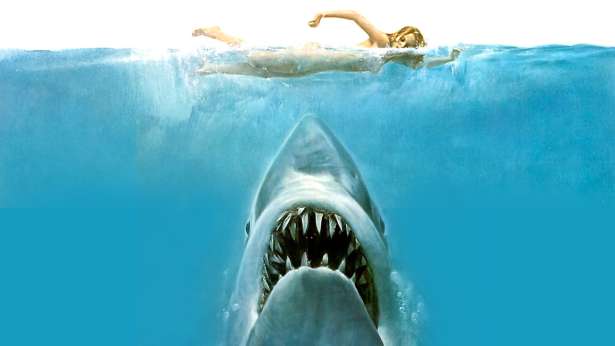
(Plus there's this weird little Jaws thing that I thought someone would snap up fairly easily but no luck yet and I have no idea who to submit it to next because no one seems to be getting what I'm doing there and I think it's hilarious and why does no one else think so?)

Related image
Pictured: me and my workload 

(And man, I'm really discouraged about a non-hybrid film essay I wrote, which has been given the curse of "I'm sure you'll have no trouble placing this elsewhere" - NEVER TRUE, y'all. If you're an editor, never, ever say that in a rejection, because the reason it's not right for you is the same reason it won't be right for anyone else. You all love it and say so, which is nice, but not one of you will publish it. This is the third or fourth time this exact thing has happened to my work. BOLLOCKS on "I'm sure you'll have no trouble placing this elsewhere.")

Point is, I am having this moment where I want to stop striving and just tread water for a bit. Here's a concrete example: I wrote an assigned review, but the finished product didn't work for the publication. The pub gave me leave to send the finished product elsewhere, no hard feelings. So I did that, but got a no on the first round, and I'm feeling like, oh, what's the point, do I really want to keep trying to place this review when the work I like best (writing) is now done and the work I like least (placement) is still before me? I know the review is quality, but I want to just trunk it because of the time and effort involved in placing it.

For just a few weeks, I want to stop pitching. I want to stop answering publicists' emails. I want to stop querying. I want to feel like I'm really absorbing the books I'm reading and reviewing, instead of reading them only just deeply enough. But Directions 1 and 2 are the work that keeps the pump primed; without it, I would dehydrate. Without it, momentum vanishes. I have April and May books that need placement, and it's not too early to start on June and July books. If I wait to pitch those, I won't place them, or at least I won't place them well.

AND YET I AM TIRED.

The usual disclaimer applies: I am not a coal miner. Writing is not, realistically, that hard. But working and/or thinking about work seven days a week is hard for a non-workaholic personality, no matter what kind of work it is.

Thursday, November 30, 2017

The Fate of the Kathy Ireland Story

So this thing I wrote, "Underside," showed up in Rivet: The Journal of Writing that Risks on November 27. I have called it "the Kathy Ireland story" many times in this blog. I wrote it after I read John Haskell's book I am not Jackson Pollock, the experience of which I've written about right here. I tried for myself the thing that Haskell did, the blending of film talk with fiction, the imagining of scenes that never were, and the result was "Underside" (which I know needs a better title but I couldn't think of one).

I wrote it with a kind of abandon I had never known in words before. I worked hard, but with the air of a joyful experiment. I had no idea what it was I'd written when I finished, but soon enough I realized I'd embarked on something meaningful.

Friday, July 8, 2016

Cue the Berets and the Wine

A few weeks ago, I submitted the Kathy Ireland story to a market, and almost immediately I got an email back from one of the editors asking me whether I considered it fiction or nonfiction. I had no idea how to answer this question. The real answer is for us to sit around with wine, in our berets, and talk until someone has to go pay the babysitter. But that's stupid and pretentious and inefficient to tell an editor, someone who probably just wants to forward my submission to the appropriate slusher.

By wordcount, the Kathy Ireland story (let's shorten it to KIS) is nonfiction. Most of its 1,600 words consist of me narrating about film and my experience at an opera, and all of those parts are either true or my true opinions. Then there's about 500 words of fiction: two sections of me imagining the interior thoughts of Kathy and of Meryl Streep.

After I finished writing, I wasn't sure myself whether it was fiction or nonfiction. My tendency is to think that a shred of fiction, of the intentionally invented, paints the entire work with that hue of literary endeavor. You apply Photoshop to a picture, bang, it's Photoshopped; you can't be a little bit pregnant. On the other hand, the KIS is, really is, nonfiction, for the most part, in a way that's important to me. I strained to tell as much of the truth as I could in the KIS, in a way that was new to me when I wrote it last spring but which has become closer to a default mode as I've written more stories like it.

I still call it a story in my mind, because calling it an essay would be disingenuous and calling it "this weird thing I wrote" is not very professional. When I describe and/or submit it and similar stories, I've been calling them "hybrid essays", a pretty and approximate term that doesn't mean all that much outside of academia and a small cadre of writers like Maggie Nelson.

A growing part of me is simply uninterested in how work like this is categorized. I'm interested in what other people will say about it, but in an intellectual rather than a personal way (like, cue the berets and the wine, I got no babysitter to pay). I don't have much invested in the labels that gatekeepers will put on the KIS and work like it. I get the need for that kind of labeling, because I know firsthand that it's impossible to figure out where to find Maggie Nelson in a given bookstore. Such labels, failing all else, are a practical necessity. I'm fine with that, I comprehend that, I haven't a whisper of anarchy in my personality and you couldn't convince me that there should just be a single label of BOOKS under which everything is tossed alphabetically. Definitely not.

But how I think of myself as a writer just isn't involved in such a calculation. I always try to tell the truth, and whether that's a literal truth which has a set of, let's say, journalistic standards to which I need to hold myself, or a life-truth that is best communicated using situations and characters and ideas that I made up - more and more, now, it's all the same to me.

What I have to say seems to demand that I cross the streams. So be it. I read Nelson's Jane: A Murder last week, and it felt so much richer for combining poetry and nonfiction, much more so than a normal prose book about the same material would have been. That's something I could stand to hear about my work.


But it won't be said about the KIS anytime soon. It got rejected by the market that wanted to know what I considered it.

My reply said that by word count it was nonfiction, but it did have a little fiction in it. And I apologized for not being able to answer the question properly. The real answer is that I want the reader to consider the work herself and tell me what she thinks. What I think of my work is unsurprising; I live inside my head full-time and am reasonably aware of my opinions. What others think of my work is much more interesting to me.

In fact, I'm extremely curious to know where other writers and readers draw the line between fiction and nonfiction. Do you, too, have this idea that one stitch of fiction makes the whole hem fake? Do you think that essays which stretch the truth, like John D'Agata's famously do, should be named fiction instead?