Showing posts with label frustration. Show all posts

Monday, March 11, 2019

Four Directions, No Rest

You guys, I am tired. I am really, really tired. Here is the career thing I'm wrestling with on this restless, overcast Monday: I am working in four different directions, and they require totally different kinds of engagement.

Direction 1. Growing my reach, meeting prestige goals. I think this is...professionalization? Trying to get my work into bigger, better-paying, more prestigious publications. Reaching outward for as many opportunities as possible. This is an exhausting direction, made up of hundreds of small moves: emails, check-in emails, calendaring follow-ups, research, networking, sending the same pitch to four or five places and then following up on them all, etc.

Direction 2. Pay. Placing my work in publications that pay money. There's a lot of overlap here with Direction 1. But it's additionally tiring to consider whether to keep pitching Publication X, even though I've never heard back from them and our artistic interests only align in a few places, simply because they pay so well.

Direction 3. Artistic and community fulfillment. Do I get to write what I want to write? Do I get to support a small press or a first-time author? This goal almost always contradicts Directions 1 and 2, though the degree of contrast varies.

Direction 4. Maintain links and relationships with pubs and people I've been working with happily. Keep saying yes to editors and publications with whom I work well, keep sending reviews to publications that will treat them right. It's more difficult than I ever imagined to do Direction 4 and Direction 1 at the same time.

Keeping track of all four of these and how they interact is so hard that, today, I'm thinking about temporarily ditching Directions 1 and 2, just like, never mind, fuck it, I'll keep writing $25 and $50 reviews for the sites that pay me and post my stuff promptly (even though they savage the hell out of my style) (in opposite ways), I'll keep writing for the two magazines that don't change a word I write even though the pieces rarely or never appear online, I'll stop pitching [redacted], fuck it fuck it fuck it it's too much. (And then, no fooling, [redacted] wrote me back this morning asking for more pitches.)

There's also the problem of all of this applying to book criticism AND to my other work, which, by the way, I still can't figure out how to get back to. I've had a bunch of rejections for my hybrid essays in the recent past, which means it's time to send out the work to the next round of pubs. I'm out of immediate ideas for pubs to submit to, so it's time for research. But research is the last thing I want to do right now. It's obnoxious to find pubs that want hybrid essays, particularly when they're as long as mine, and you guys, I am tired.

(Plus there's this weird little Jaws thing that I thought someone would snap up fairly easily but no luck yet and I have no idea who to submit it to next because no one seems to be getting what I'm doing there and I think it's hilarious and why does no one else think so?)
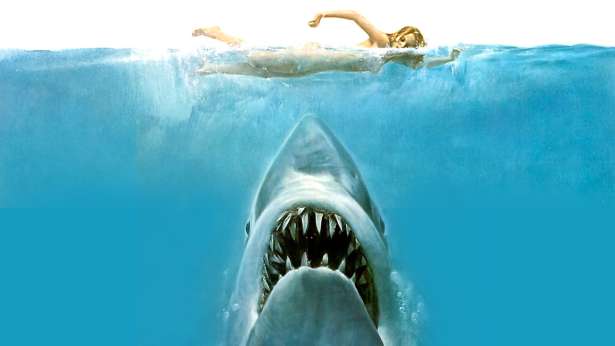
Related image
Pictured: me and my workload 

(And man, I'm really discouraged about a non-hybrid film essay I wrote, which has been given the curse of "I'm sure you'll have no trouble placing this elsewhere" - NEVER TRUE, y'all. If you're an editor, never, ever say that in a rejection, because the reason it's not right for you is the same reason it won't be right for anyone else. You all love it and say so, which is nice, but not one of you will publish it. This is the third or fourth time this exact thing has happened to my work. BOLLOCKS on "I'm sure you'll have no trouble placing this elsewhere.")

Point is, I am having this moment where I want to stop striving and just tread water for a bit. Here's a concrete example: I wrote an assigned review, but the finished product didn't work for the publication. The pub gave me leave to send the finished product elsewhere, no hard feelings. So I did that, but got a no on the first round, and I'm feeling like, oh, what's the point, do I really want to keep trying to place this review when the work I like best (writing) is now done and the work I like least (placement) is still before me? I know the review is quality, but I want to just trunk it because of the time and effort involved in placing it.

For just a few weeks, I want to stop pitching. I want to stop answering publicists' emails. I want to stop querying. I want to feel like I'm really absorbing the books I'm reading and reviewing, instead of reading them only just deeply enough. But Directions 1 and 2 are the work that keeps the pump primed; without it, I would dehydrate. Without it, momentum vanishes. I have April and May books that need placement, and it's not too early to start on June and July books. If I wait to pitch those, I won't place them, or at least I won't place them well.

AND YET I AM TIRED.

The usual disclaimer applies: I am not a coal miner. Writing is not, realistically, that hard. But working and/or thinking about work seven days a week is hard for a non-workaholic personality, no matter what kind of work it is.

Friday, July 10, 2015

Pneumonia, or Something Like It

This story starts in my adolescence, but we haven't got all day. It starts again during my college years, but there's nothing uncommon about that part of it. Waste of words. For our purposes, it really starts in March, which, as I told you before, was a month flattened out and made pallid by inertia.

Things did not get better after that. They got worse. It took most of the spring, but eventually I had to admit that my symptoms aligned, like eclipsing planets, with those of depression.

Melencholia, Albrecht Durer, 1514

Depression is not a sexy illness. It's not rare. It's got a spectrum so wide that the noun has less meaning than it should. It's also hard to explain (to justify?) as an actual illness, but that was how it came to me this year: as a virus that would not go away, that deteriorated from a cold to the flu to pneumonia. Walking pneumonia, really. I functioned at the required levels, but something was eating me alive on the inside.

By mid-May I could not read anymore. My concentration was too spotty to be able to follow a book from chapter to chapter. I couldn't even read short stories, because I'd reach the end without understanding what had happened. I'd read a page, and then read it again, with no memory of any of the prose. Reading has been the best part of my life since I was three years old, and it was suddenly gone.

There were other things, too.

The most painful symptom was an inability to write. I don't like the term "writer's block" (that post is for another day) and anyway this did not feel like that. This was fear and uncertainty and paralysis and despair and anxiety so big and buzzing it was like trying to imagine writing while pelting headlong through a beehive. The inability to write fed the depression and vice versa. And it seemed like more people than usual (well-meaning, often beloved people) were asking me what I was working on, and it was horrible to try and form an answer to that question that wasn't just shouting "I'm sick, I've been sick, you don't want to know about it, just tell me about your life instead."

Finally, last month, I went to the doctor, and I started clearing out the accumulated bacteria. That process is slow, and ongoing. But my progress of late is so encouraging that I cannot help but share it with you, which is why this post is happening at all. I'm functioning again, and not just at the required levels; I've reclaimed my interest in the world, in art, in ideas. I've gulped half a dozen novels in the last three weeks. Music has gotten its color back.

Best of all, I wrote some prose yesterday. I hadn't written anything since the end of February, and had built terrifying structures born of illness around the process of writing. It wasn't much, just 250 words or thereabouts. And it came largely out of boredom rather than inspiration (though, hey, boredom is a long-endorsed wellspring of creativity). And I don't know that it will be of use for the project to which it belongs. Except that it already has been of use, because it was the first prose I'd written in over four months. I wanted to pop open champagne.

I hope it's okay that I posted this, out of nowhere, and that there may be more radio silence for the near future. I've missed this space and I wanted to explain, even if it's oversharing. I want to resume commentary here on a regular basis, but I'm wary of doing too much too soon. I'm still recovering from pneumonia, after all.

Wednesday, April 22, 2015

Precision v. Grace, Classical v. Jazz (or The Great Oz Has Spoken)

Last week I sort of unintentionally reread some feedback a professor gave me about a year ago.
While this piece feels done, it’s felt done from the beginning, and done in a way that, as impressive as the writing is, feels like there’s a cap on, holding everything together deliberately and tightly. I know this is what most writers aspire to, at least for a while. And then there’s the next stage, which involves letting go of all that tight control to dig deeper, to burrow, to be surprised. I think I already said this, and if not, shame on me. But really, if you can write this well, Katharine, imagine how well you might write if you were really writing. And by that I mean working the language intransitively, not acting upon but acting – not writing about (the self), but writing (the self). You clearly have all the craft skills you need to stop thinking so clearly in meaning. 
This feedback confused me. Even after I achieved some distance and met with the professor, the way forward did not come clearer. (I still didn't understand it particularly well in rereading last week.) But I set it up in the back of my mind, kind of like a canvas backdrop, while I went on and wrote to the best of my ability.

I blogged last fall about how much despair ensued when another professor unknowingly echoed what the first one had said. The backdrop rippled a little, starting to appear more realistic and less like scenery, but I still didn't know what to do with it.

This blog post does not tidily conclude with me figuring it out.

Tuesday, March 24, 2015

Getting Underwater

This is the truth: I'm not really enjoying the single class I'm taking this semester.

I've tried on several different explanations for size and have settled on two unrelated reasons. 1) The material is not engaging me really at all, in ways that are not the professor's or anyone else's fault. I liked studying Ulysses closely - the sensation was a series of reliefs (relieves?), an experience I might unpack in a later post - but it didn't really light up my brain. Our most recent read, To the Lighthouse, I found impenetrable (probably my own duncery there) and thus I did not enjoy studying it. It was like I'd come to class having read a completely different book than the one the professor discussed. Although I loved the first book we read, The Good Soldier, we really used it as an example for wider literary issues rather than reading deeply into the book itself, which disappointed me.

Merrily we roll along into The Waste Land, which I've read, and I liked the actual poem but found myself bored by what seems to be the point, which is all the allusions and notes and etc. And the latter is, I'm sure, what we're going to focus on in class.

I think we can all agree this is beautiful, but pretty weird

2), just as crucially, I'm itchy to write and I want to be doing that instead. Between work and recovering from work and school and recovering from school and doing so many social things lately and keeping us in groceries and clean laundry, though, I'm having a hard time finding space for it. It's making me disgruntled and that's bleeding over into my experience of school.

I need to do better at elephant-eating. A hundred words a day, or something. But when I think about working that way, I think about my mom, and virtual reality.

When my mom is working, there's this effect of a satellite delay between when you speak to her and when she responds. "Hey, Mom?" [one Mississippi, two Mississippi, three Mississippi, four Mississippi, five Mississippi, six Mississippi] "Yes, honey?" She doesn't even necessarily look at you or stop typing when she responds; it just takes her that amount of time to come out of the fifteenth century and back into the present moment to recognize that someone has spoken and she's bound to reply. She's explained to me - although it didn't really need to be explained, because I've watched it happen - that she has to go through a definite process of disengaging to answer whatever it is that you need from her, and then it takes time to re-engage with the work before she's back where she was. Even an interruption like "Where's the extra soap?" or "Want another cup of coffee?" will lose many precious minutes for her.

She says it's like being underwater, like scuba-diving: all above the surface is dull and far away, and she'll get the bends if she comes up too fast. My own metaphor for this phenomenon is like The Matrix, or some cybermovie from the 1990s where people have to plug into the New-Fangled Information Superhighway with a complex set of gear - something over your eyes, fingers into stable gloves that don't move, ears and nose plugged, something down your throat, etc. Body horror machinery that you need an assistant to get into and out of. Not just a little plug in the back of your neck, and not quite as immersive as that gross red goo with a jillion wires where you live until Morpheus wakes you up: something in between. Disengagement takes time, and re-engagement takes time. It's a process, an effort, an upsetting bother.

Pictured: my mom's metaphor mixed with mine. A.k.a. the cyber-dolphin from Johnny Mnemonic.

When I'm really, totally inside my fiction writing, my immersion is as intense as my mother's. But it takes much more time than a satellite delay to get me inside that zone - over half an hour, easy. The process of plugging in is often so laborious that I buck at the idea of doing it just to write a few hundred words before I have to stop and meet an outside responsibility. Especially for the secret project, which is such a different kind of writing than what I've done before that I need 110% of my concentration to even do it.

I must learn how to overcome this, though, and write a little at a time. I must. That's how my life looks right now, that all I have is dribs and drabs of time, not chunks of it, and I need to be using them.

Sigh.

In book news, I read Middlemarch over the last four weeks. I totally loved it. It was a pleasure. Beneath its old-fashioned exterior is a pen of such strength and wit and insight that it blew my mind.

Middlemarch was also my Big Book for 2015, so that's out of the way. I'm thinking of one of those huge Russian novels for 2016, Anna Karenina or War and Peace or some such book. I've heard all good things about those novels and I even read about a third of Karenina at one time, but I just don't have a lot of interest or motivation regarding them as of yet. Meanwhile, it's shaping up that I'm going to read the other two volumes of Remembrance of Things Past over the next two summers. Three years of Proust! I wish I could have read it all at once, but this is an acceptable compromise.

Wish me luck at getting underwater in April. My self-imposed deadline is starting to look unrealistic. :(

Thursday, January 15, 2015

We Interrupt This Self-Promotional Blog to Bring You a Navel-Gazing Post

On Friday, January 9, I had a really, really weird day, full of dizzying highs and dreadful lows. It contained lots of news about writing, this day, none of which I can share with you here, and it was impossible to get to sleep at a decent hour that night. Inside my head, seventy-six trombones led the big parade, and the quiet bedroom was so noisy that I had to get up and go to my computer.

I put in earbuds to block out the intermittent sound of an amorous pair with some manner of connecting wall to my living room, and then I set to work, because my head was just too loud to do anything else. I wrote a short humor piece that I'd been contemplating for about a week, and then I wrote a longer thing about Star Wars that was already visited upon you. It felt good to write; January has been quite lucky with regard to the other thing, the publishing thing, but the writing thing is the better thing. It seems like I have to forget this, over and over, in order to remember it, over and over.

Because despite my ambitions, I haven't written a word on the wikibook since the semester ended a month ago. I've read a bunch of stuff - DFW and Edith Wharton and Richard Todd and lovely Georgette Heyer and Antonia Crane - but I haven't written anything that pushed me out of my comfort zone. Not to be too plain, but December fucking sucked, and it's taken me these first two weeks of January just to exhale and get over it.

Pictured: Me (left)

It hurts that I've failed to get started as I'd planned to, but if I've learned nothing else about the way I write, I've learned that all things come in their own time. I'm finished feeling shell-shocked and exhausted and have started feeling restless, so I hope to set a rhythm in the next month that includes several hours a week of writing. And I'm staring down nothing at all except the wikibook: no short stories, no genre fiction, no Highbinder sequel. Wikibook. Or bust.

I was considering taking the spring off from school in order to work at my job (in an office) and work at my job (at my notebook), but I felt so discouraged about that idea, pushing the start of graduate school off until 20damn16, that I took Matt's advice toward the Middle Way and I'm only taking one class. I'll take another one in the summer, and then I'll finally be eligible to enroll for the MA.

Now that I'm two years in and almost there, I confess to feeling some uncertainty about my choice. CSUN has so thoroughly exceeded my expectations that I'm not wavering about that aspect, but the idea that I should've tried for an MFA instead keeps nagging at me. In terms of school suitability, I can't avoid moving locations in order to do an MFA, and I can't see my way to that. Anyhow I don't work well in unstructured school environments, plus I'm not interested in being competitive with other writers, so I struck the idea of an MFA from my vision of Writer-Me.

But still. Would I have better opportunities? Would I learn better or more useful ways to write than I have in the past two years or will in the next two years? Would it look better on my mental resume? Am I going to wind up talking myself into an MFA anyway, or even a dreaded PhD, because I won't feel finished when this is all over? Will I wind up penniless and school-addicted, unable to adapt to life outside a classroom, unable to write without a workshop group, unable to read without class discussion? Should I quit now, now that I've reached a place of mild confidence as writer and reader (even though I know there's more to learn, as there infinitely is), and I'm not yet totally broke? Or is it too late? Am I already irrevocably lost to the ivory tower?

Pretty good card, actually

Rgh. Whatever.

On another note, I know there are a few folks reading who are DFW fans. If that's you, get Karen Green's book Bough Down. (NB: I looked for it in every indie bookstore I visited for about six months before I gave up and ordered it from Amazon.) She's his widow, and the book is more or less about her grief. It's also one of the most fascinating books I've read in the past five years. It's uninterested in whether you as reader/viewer get what she's trying to say; it's inward-looking, personal, in a way different from most everything I've ever read. Not obtuse, like so much literature, but personal; it's not that she's toying with whether or not you understand, but that it's completely clear to her what she means and if you can't understand, well, you're just not her. Like unexpurgated Anais Nin, but distilled, with a sharper wit behind it. It's also deeply, deeply sad, and unnerving, and finely wrought. Get it, and maybe get a magnifier for the collages in it at the same time.

Maybe my January hasn't been wasted after all. A good book is a salvation and a blessing, is it not?

Tuesday, May 6, 2014

Coping with Salieri Syndrome

Last night I was thinking about Brian Wilson. Sometimes, in order to keep the lid on a persistent earworm, I assemble weird mixes from my iTunes on the fly. The more I confuse my music center, the less likely it is that the Jem theme is going to kick around in there all night. Why not listen to the Bellamy Brothers next to Dr. Dre? Last night, along with some Dylan and some Feist and some Daft Punk & etc, "Wouldn't It Be Nice" got in there. Every time I'm listening to the later Beach Boys (i.e. not the "Surfin' USA" era), I think about poor Brian Wilson and the misfortune of being born a Salieri.

The legend goes that Wilson worked himself to the bone making Pet Sounds in response to the Beatles' Rubber Soul. Today neither album sounds crazily different from what preceded it, but at the time they were both big leaps. Fun, fluffy pop marked both bands' careers in the early 60s, but Rubber Soul was richer, folkier, more varied, more album-like, even a little experimental at times. Pet Sounds tried to mimic these qualities in its own way.

Rubber Soul happened at the end of 1965. The Beach Boys released Pet Sounds in 1966. Yay! Totally worth it!

And then, in 1967, the Beatles made Sgt. Pepper's Lonely Hearts Club Band.

And Brian Wilson had a total nervous breakdown.

I'm not kidding. Wilson's mental health was pretty fragile throughout the mid-sixties, but evidently Sgt. Pepper was the breaking point. McCartney has said that the band was inspired by Pet Sounds to make Sgt. Pepper, which is nice and all, but, um...Sgt. Pepper. Your argument is invalid. The Beach Boys were never the same; Wilson went somewhat AWOL until the early 70s, and they kind of bounced back later, but it wasn't like before.

I think it broke Wilson that the Beatles were revolutionizing pop music pretty much right under his nose. He probably had, in greater abundance, the same feeling I have about Randall Munroe (the creator of xkcd), which is like "I totally hate you for your brilliance, but please don't stop making art, but you're making all of us look bad, but I love you, but I also hate you." (Don't misunderstand - I am a little ant trying to make little ant art, and Munroe's had enormous, widespread success, and anyway he and I aren't even in the same field. So it's definitely not the same thing. But that IhateyouIloveyouIhateyouIloveyou feeling's gotta be the same.)

Like this. Remember this? In Ratatouille? When Skinner eats the ratatouille at the end, and is immediately astonished/in love/furious?


The problem is, when you're confronted with once-in-a-century genius and you're just a once-in-a-decade artist, you can't see it as history will. You can only take it personally. That was the best part of Amadeus (aside from three hours of superlative music) - that interesting problem of well, I can't really blame you, Salieri, for hating Mozart, because if you're a composer other than Mozart in the eighteenth century, it sucks to be you. It probably sucks about as much as it does if you're a band other than the Beatles in the 60s.

So, there we are. Poor Brian Wilson.

But this is another reason why spite and envy about the creative works and/or success of other writers is such a waste of time. If they're better than you, even if they're on another plane of better than you, there isn't much you can do about it but be the best Salieri you can be. History will roll on with or without you; you can't control it. And, after all, Pet Sounds is a really good record. Well worth a listen.

Thursday, January 23, 2014

A Brief, Imaginary Interview

Imaginary Interviewer/Inner Critic: So...why haven't you been writing blog posts about writing lately?

Me: Because I haven't been doing any writing. In months.

II/IC: And why is that, pray tell?

Me: Because I can't get started. Because I'm too excited about school starting. Because there are all these books to read and movies to watch. Because I'm afraid I'll screw up whatever I try. Because it never feels like I have the time to set down in stone for writing, even though I fritter away hours every day (a few wee chunks at a time).

II/IC: So it's not a matter of having no ideas.

Me: Are you kidding? I have ideas coming out of my ears. I have two big ideas and one small idea and new commitment to the wikibook and that resolution to revise Highbinder and etc. Ideas are by no means the problem.

II/IC: Are you worried about other parts of your life becoming too sloppy if you get involved in one or all of these projects?

Me: No. Matt will pick up the slack if need be. He can see that I'm struggling and that I want to write very badly, and he keeps making suggestions about when and how to make it happen.

II/IC: You have ideas, and you have time, and you have the encouragement of your spouse. I'm not seeing a good explanation here.

Me: Yeah. Tell me about it.

Even my subconscious is muscling in on this problem. I had the same kind of dream four nights in a row this week; the content is inappropriate, but let's just say that I know what my brain is telling me to do. The small idea I mentioned above was more or less dropped in a neatly wrapped package in my lap on Tuesday morning by the dream I had. A scream from the tangle of my subconscious: WRITE THIS, STUPID. I can't believe it'll take me more than two hours to do up a draft of it.

And yet.

It might be this afternoon, actually. I have a couple of empty hours and access to a nice quiet library. Wish me luck in not finding other things to do instead.

Saturday, September 14, 2013

State of the Bookstore

I had a very frustrating experience today.

As I mentioned a few posts ago, I'm taking a course with a fiction writer, Jim Gavin, starting in October. I decided to buy his book and read it, 1) for politeness 2) to see where he's coming from 3) possibly to have something from which to draw questions and examples. I remember reading something vague, ages ago, indicating that traditionally-published writers get more screwed on royalties on Amazon sales than they do on brick-and-mortar store sales, so I decided to go buy the book at my closest bookstore. Aside from used stores and surplus stores - neither of which would likely have the book, because it was just published in February - the closest is a Barnes & Noble 10 miles and 20 minutes away in Calabasas; the next closest is another B&N 20 miles and 30 minutes away in Thousand Oaks.

So we made a day of it, went to Thousand Oaks and ate at Umami Burger (and found out my favorite boutique, which had amazingly fun clothes at absurdly low prices, has closed) and went to the bookstore after.

They didn't have the book.

So because it was sort of on the way home, we went to the other B&N in Calabasas.

They didn't have it either.

Heckuva job, y'all. 
Now, because I often want books that aren't brand-new, nor are they bestsellers, I usually start at Amazon instead of going to the bookstore. Especially because the closest bookstore is a hassle* to get to. But I thought this would be a great example of an occasion where the bookstore was the right place to go: the book was just recently released (by Simon & Schuster!), and I wanted to maximize the author's royalties. And lo, I still couldn't get the book.

I know part of the problem is that I was at two B&Ns, instead of at an independent store where they'd be more likely to stock a book of short stories by a first-time author. But I can't find a single independent store in the Valley that isn't a used shop; the closest one as the crow flies appears to be in Malibu, which is 40 minutes away. I know I'm in a bit of a dead zone, but that isn't the point. Every time I've tried to do the right thing by books and not buy them on Amazon, I've ended up discouraged, having wasted time and gas in order to find out that I should've just ordered from Amazon in the first place.

I don't know what, if anything, this means for The Future of Books. Maybe nothing. It's anecdotal, after all, and maybe doesn't line up with everyone's experience. Matt and I talked about it on the way home, and he said it would be nice to have an Espresso Book Machine sitting in the corner of any given B&N, so it could spit out the book you wanted even if it wasn't on the shelf. Shit, I said, if it was up to me, Espresso Book Machines would be on street corners like mailboxes. But I guess that's too much to ask.

*I know the stores aren't very far away in relative terms, i.e. for someone who lives in a suburb or a rural area. But I live in Coruscant Los Angeles. Ten miles? Come on. There's like four Trader Joe'ses within ten miles of me. 

Friday, May 10, 2013

Hey Pretty...

Snippets.

--I keep getting e-mails from people who want to add me on Twitter, LinkedIn, or Google+. I do not want to be a part of any of these networks. I get an e-mail from one of them once or twice a week. I'm starting to see how Baby Boomers feel when people tell them they have to get a webcam, or a smartphone, or a whatever. LEAVE ME BE, WHIPPERSNAPPERS.

--I thought I'd be working on House of Leaves for at least a month - it took me ages to read Infinite Jest - and I finished it in about a week. Very surprising, particularly since in the early sections it took me an hour to get through 15 pages, but then later there were whole chunks of pages that just raced by because there were only a few words on each page. I think that either Johnny or Johnny's mom conceived the entire thing, stem to stern. My main pieces of evidence are the grammar and punctuation oddities that persist in every incarnation of text throughout the book, but there's also the Pelican thing, the different languages, other stuff I read on comment threads that fits in. I think the house is the mind, and the horror in the house is the fact of death. (Highlight to read; do not comment and spoil, just e-mail me if you want to talk.) I also think that Mark Z. Danielewski read Infinite Jest in 1995 and decided he just had to make his own. But if I'm wrong about that, I apologize personally and profusely to him.

Did I like it? Sort of. I found it interesting to pick up and study from all angles, like a mutant in a jar. I found it useful when considering my own future project. I found it exasperating. I think I like the experience of looking back on it far more than I liked the experience of reading it. In places it was fascinating, revealing a writer with a powerful stylistic gift and a dark and scintillating imagination. Those moments were frequently buried under semi-scholarship and wearying footnotes. But I did learn the term "ergodic literature" in the process of reading it, which is almost worthwhile on its own.

--Months ago I changed my e-mail notification sound to a lightsaber unsheathing. Despite hearing it a dozen times a day, it hasn't gotten old in the least.

--Blogger doesn't work very well with dual sign-ins on Google, and neither does Google Docs. This has become a giant headache since I got a new job that uses Google Docs almost exclusively. It means I have to go through a big hassle to blog here. Which I do not like.

--I have a date to see The Great Gatsby this morning. My anticipation, bosoms a-heave, and the reasons therefor could be a really long post in itself.

--Haven't written in about a week. Reeeeally itchy to get started on something already.

--I did come up with a new load-bearing plot line for the Marilyn book. It and the weird wiki/CYOA project are vying epically for my favor. I want to write (or at least make a significant effort on) one of them this year. Before fall. But I don't know which one, and I'm mentally dawdling around trying to choose when I ought to just pick one and go.

--My website keeps popping into my head at odd moments. I desperately need to set aside a half-day and update/fix it. It's pretty much a year out of date at this point. That's embarrassing.

--After the last piece of feedback I got, I suddenly lost all patience with the writing process and the thoughts and emotions it stirs. At that moment, I no longer wanted to write for the consumption of others, and I understood better than I ever have the people who write novels and never show them to anyone. Not through twisted perfectionism (that's a mechanism I understand very well), but because they wrote for themselves instead of for an audience. I wish I'd believed I should be writing that way all along, because I don't think I'd be so unhappy with my work now.

I'd really like to write a longer and more exploratory post about this, but it might not be forthcoming anytime soon.

Why, no, that experience has nothing to do with not having written anything since. Nothing at all.

--

Saturday, March 23, 2013

Sundry Adventures with Salt-N-Pepa

I have something completely unrelated to writing to tell you about today.

In October of 1993, Salt-N-Pepa released Very Necessary and I turned 12. I had a friend named Karen Reed during my middle school years, and her mom was a bit more permissive than mine about the kind of music Karen was allowed to listen to. She had a cassette of the "Shoop" single, which included a bunch of remixes, the square and educational song "Let's Talk About AIDS" (as a companion to their hit "Let's Talk About Sex"), and the B-side "Emphatically No".

I borrowed the cassette from Karen and listened to it A. LOT. Because "Shoop" was an awesome song (and I dare you not to find it so even now) (the outfits are a little dated, but the model around the 2:30 mark makes it all worthwhile), and as it turned out, so was "Emphatically No". The title is kind of all you need to know; a dude propositions the sweet ladies of S-N-P and S-N-P turn him the hell down repeatedly. I have now had this song in my head on and off for nearly 20 years, and when I was 12 was the last time I had any access to it.

Some weeks ago I tried to find "Emphatically No" on the internet to see if it was as cool and funny and empowering as I remembered. All efforts in Google, BitTorrent, iTunes, Amazon, and even YouTube failed. Apparently this song was not available in 21st century media. Amazon did offer the CD single, though, so I thought, hey, I'll bet I'm not the only woman in her early 30s who heard this song as a tween and wonders what happened to it. I'll get the CD, rip it, put it on YouTube, and then I'll get a bunch of poorly spelled comments thanking me for my efforts.

So I ordered the CD. A week or so later, I got a message that the order was cancelled. When I wrote to ask what happened, I was told that due to a UPC scanning error, it turned out they never had the item to begin with.

Okay, no problem. Just order another one. There are a bunch of copies on Amazon. So I ordered another one, even though I was slightly embarrassed to have ordered two copies of a Salt-N-Pepa CD single from 1993.

A week or so later, I got a package in the mail, and when I opened it, I found a copy of the DVD of Identity (2003), starring John Cusack and Ray Liotta.

I wrote the seller and asked what happened, and evidently another UPC scanning error occurred, and that seller never had the single either. And now I had a free copy of Identity and no Salt-N-Pepa.

So I placed a THIRD order for the damn single. And all I could do was laugh. Like, uncontrollable belly-laughing. Because it was just so ridiculous! All for the love of a Salt-N-Pepa B-side.

My third order was cancelled.

(Incidentally, this episode is emblematic of how my March has gone. Nothing is easy and everything is scripted by Samuel Beckett.)

This third cancellation was for the third used copy I'd tried to buy. I prefer buying used items whenever possible, but at this point I'd just had it. I was still dogged in my determination to get the effing song, but I was honestly beginning to believe that every one of the 60+ copies purportedly for sale under the Used rubric was not an actual copy of the CD, but was listed due to an error. So I bought the last "new" copy that Amazon had on offer, via Newbury Comics, for $11.99.

$12 for a Salt-N-Pepa single from 1993.

A couple of days later, a package arrived. I opened it and found a sealed, brand-new copy of Identity (2003), starting John Cusack and Ray Liotta.

I hope you're finding this funny, because I sure as hell did.

I wrote to Amazon asking them for a return and notifying them of this remarkably consistent error. Then I looked down the list of used copies of the single, seeking the first description that a) mentioned the item as a CD and b) appeared to have been written by a human looking at an item, rather than basic filler text inserted by a large-volume independent seller. I e-mailed that seller, requesting confirmation that the item actually existed due to my being burned FOUR GODDAMN TIMES.

He said he was pretty sure he had what I was looking for, and I ordered it in three seconds flat.

And today...


Twenty minutes or so later:


So. Now you can tell me for yourself whether all that absurdity was worth it. Of course, without the absurdity, you'd never know, would you? Because I wouldn't have been able to put the fucking thing on YouTube at all.

By the way, does anyone want a copy of Identity?

Thursday, January 10, 2013

92 Reasons I Won't Recommend This Book

Is this song cheesy or comforting to the heart? I love it, but the internet has said that it sounds like a song from the credits of a third-rate 80s movie.


I think I've written 10,000 words on KUFC this week. Not shabby. I would have written more if I could stop fiddling with the last two scenes that I typed up (dammit). I keep remembering things like "if she was eating grapes she'd have to spit out the seeds, no seedless grapes in 1940" and "wait, I have to point out that there were grapes on the coffee table in the first place" and "she forgot to put her coat back on before she went outside" and such. It's stupid little stuff, consistencies and anachronisms, but it's the kind of stuff I'm afraid I'll forget entirely if I don't put it in (which simultaneously feels too irrelevant to take notes about).

Also, the book is becoming much queerer than I intended it to be. My MC is bisexual, which was part of the plan all along, but it's turning out that there are more homosexual scenes/couples in the book than hetero ones. I think this is hunky-dory, but since this just happened, I'm slightly worried that I'll scare off publishers the same way Soderbergh scared off distributors. (Best comment I heard on that nonsense: "Now I'm just curious...how gay is this thing?") Ah well. Now is not the time to worry about that. And anyway genre fiction needs more healthy queerness and fewer spider-queens with eight boobs.

Speaking of scary monsters, I am reading this book:


And I think it will be the last advice book about the publishing industry that I read, unless I am recommended one after a serious, thoughtful conversation. I've read ten or so, all told, and a plethora of publishing advice on the internet. They always have the same effect. They make me insecure and arrogant in equal measures (i.e. "oh God, I'm not doing that, I'm not thinking about that, I'm a horrible writer, I'm dooooomed" intertwined with "I totally knew that, I'm brilliant, I'm way better than the herd, I'm gonna be a millionaire"), sometimes in the course of a single sentence. They get me spun up and competitive about who could be in the slush pile with me, and force me to obsess over why the process has to be so fraught and lottery-like. They make me angry because they contradict each other and themselves, sometimes in two neighboring paragraphs, as this one did. And because they codify everything about the process of publishing into secret handshakes that differ from book to book, indicating that the codification is thoroughly variable and meaningless.

To sum up: they keep me from doing good work. They take my focus off the book and onto myself and my ego, whether inflated or punctured. They advise less than they obfuscate. So I'm finished. Me and my perfectionism would rather do everything the exactly-right way to increase my chances of acceptance, but if I've learned anything at all from these fussy, confounding books, it's that the only part of the process that doesn't vary from house to house and agent to agent is do good work. (And tell the truth, but I've got that one down.) So fuck it. I'm just gonna do my best, and make the book part of that best, rather than merely my forward foot.

I note that this book, 78 Reasons etc., is apparently out of print. I'm not surprised, because the author's advice on self-publishing is no longer correct in the slightest and he doesn't mention e-books once. (It's from 2005.) However, its advice is otherwise no different than most of the other books I've read about writing and publishing. It's no outlier on the bad end. It's just as irritating and distracting as all the rest.

FWIW, I liked Self-Editing for Fiction Writers - it supplied practical, applicable advice to someone who abhors revision - and I liked The Fire in Fiction, although I suspect the latter was good because Maass is just a good writer. But, you know, those are craft books, not publishing books. Both invoked the carrot of "you want to be published, don't you?", but neither was specifically about how to get into print.

Okay. Rant over.

I'm trying very hard to do less Facebook lately, and it is a serious challenge. It's difficult on a minute-by-minute basis. And it makes me feel amazingly isolated. But I can also feel my life cracking open to let other things in: old habits, new uses for time. So...yay?

Thursday, October 11, 2012

When All Else Fails, Read More

Writing. Oh, the drama. Oh, the angst.

When I read Prozac Nation, I wondered how it was possible that the author could have any friends at all who retained any patience with her. I would have given up on such a drama queen long before. I'm now in a position to wonder why others aren't giving up on me.

I don't mean to be cryptic, but believe me, you don't want to hear the drama. It's so lame to be tempestuous about your writing and to see that you're doing it even as you're doing it and to press on anyway. SO lame.

Here's the news I can talk about: thanks to a recommendation I'll talk about later I ordered Writing Fiction by Janet Burroway et al., and it arrived yesterday. I flipped through it and read some bits and pieces during Balcony Time yesterday. Awesome book, y'all. It's a textbook so it was absurdly priced, but I think it'll be worth it.

I was reading about how detail interacts with the reader's perception to create character, which is a preferred and more skillful way to create character than to just set forth traits, and it dawned on me that this was the first time I had read or heard about this in a non-oblique way. Sure, I'd known that showing was preferable to telling, and I'd known that writers I liked gave me concrete reasons to like their characters rather than just saying "Lucy was brave", but no one had explicated the technique of it at length in paragraph form for me until now. And I hadn't understood that "show, don't tell" is a flexible statement that applies to more than one mechanic.

Writing suddenly seemed like carpentry. Like using a bunch of skills to build a table, rather than creating art per an unpredictable muse. There's artistry in a nice table, fo' sho, but I'd thought it was all mysterious and weird and woo-woo when you're creating something beyond The Da Vinci Code. I'm just not sure anymore that's true. Even high-literary writers and wacked-out experimental writers seem to have a grasp on such techniques, I realize, and I'd somehow thought it was stuff that couldn't be taught, at which you just had to have talent.

Later on I read about story form, plot, structure and the opposite thing happened: I just couldn't knock this shit down to size in my head. It all seemed abstract. Power? Conflict + connection? I couldn't make it into a framework; it seemed like the writer was saying many disconnected things with similar terms. This gave me cause to make noises of frustration aloud (quietly, so the neighbors wouldn't call the police), and to wish desperately that I could do my undergraduate degree over again and take half a dozen writing classes instead of anthropology and politics. I wanted a teacher to knead through this material class by class over the course of a semester and answer my questions and grade my papers.

Instead, what faces me is self-education. Weeks and weeks of reading this book and taking notes and doing exercises on my own. I'm going to really set down some effort on this, try and make it a self-taught class in writing fiction, and I expect to marvel during the process about as much as I despair.

I have been thinking lately about trying to take a couple of writing classes at Cal State Northridge, which is not the finest university in California but which is only a couple of blocks away. Not a bad place to start, at least. I'm not sure I can afford it and I have no idea what the protocol is for enrolling someone like me who already has a B.A., but I'm seriously frustrated about feeling like I'm at square one every time a question of mechanics or technique comes up. I need a better toolbox. And you know what Hermione does every time she's stuck and doesn't know what to do? She goes to the library. This is what I was taught to do, too.

That's how I got my hands on Writing Fiction, in fact. Some weeks ago, after getting a rejection, I asked an English professor I happen to know what she thought I should do about feeling inadequately educated in writing. She was very much against an MFA, but she suggested looking at syllabi for MFA programs and reading those books instead. I thought that was a terrific idea, and she did me one better by asking a colleague of hers, a writing professor whose name I know because she won an O. Henry a few years back and I read that story, whether she could recommend any books for this purpose. She did, and that led me to yesterday's grrring on the balcony.

And that brings us to...now.

Wednesday, October 3, 2012

Grumble

One of the books I checked out of the library on my most recent trip was Raymond Carver's Will You Please Be Quiet, Please?, which, after about a third of it, I'm pretty sure I've read before. I don't remember how much of Carver's total oeuvre I've read, but I remember these stories, so if I just picked the same only book of his I've read, well, that was pretty stupid.

I checked it out to remind me of the experience of reading Carver's stories. I'd read them before and only sort of understood, kind of the way I feel when I read Hemingway. I can tell there's expertise and genius here, but it doesn't feel comfortable against my brain. I want more detail. I want more words. I don't want biting economy of language; I want the full ostrich-feather caress that I get when the writer wants to say it all.

Some would argue that Carver does say it all, but that you have to read under the words and between the lines. That he's a jazz musician: read the words he's not writing. There was a Simpsons episode where Lisa said this to a co-audience member about a jazz concert, "listen to the notes she's not playing", and the other guy scoffed and said he could do that at home. I find myself in that guy's shoes. I like jazz and I like subtext, but Carver's an iceberg: there's so much below the surface that it feels dangerous to navigate.

The thing is, I'd argue that nearly all of modern literary short story writing, all the journal stories, are Carver's offspring. Most of the stories I read on journals' pages are cold and subtextual and filled with hard emotions. They are based around seemingly ordinary incidents injected with subtle meaning, and they generally insert an event or conversation 2/3 of the way through that machetes quickly to the heart of...something, when previously it all felt benign. Or lifeless.

If it's not plain, I don't like this kind of writing. I admire Hemingway and Carver for being able to pack so much into so little, but it's the same kind of admiration I have for people who write exquisite historical nonfiction. The achievement fails to connect with me.

If Carver has a polar opposite in my reading life, it's Henry James, whom I adore. (Ironically, he was something of a radical for his time, and his straightforwardness could be compared to Carver's in context.) No one could accuse him of being brief, but his situations, turns of phrase, long and complex sentences, characterizations punch my gut far more powerfully, even though in theory I have a lot less in common with his 19th-century characters than I have with Carver's 20th-century folk. And even exhaustive detail doesn't rob James of ambiguity, you know. It just means there's more heft to him, more to see when you set sail.

No one writes like Henry James anymore. No short story writers, anyway. He uses adverbs, for God's sake. He explains. He doesn't hesitate to use fifteen words instead of five. He rolls around in language like a horse in a field.

I don't understand why there's only room for Carver stories in the literary market these days (unless you're a virtuoso writer), and I am frustrated by it. Yesterday I developed a story idea and thought I might, just for an experiment, try to structure and write it as if it were a Carver instead of the way I'd like to. But it's discouraging to feel the subsequent lift of "maybe that'll get an acceptance", just due to mimicking a style I don't like.

I can't even bring myself to finish his book of short stories. I just don't enjoy them. It's bad; I mean, this is my market. The very essence of it. But it's going back to the library unfinished.

Tuesday, August 28, 2012

Ten Pints of Blood

I was driving along in Idaho the other day, heading home, when my phone did the Darth Vader breath, which lets me know that I have a new e-mail. I very stupidly and illegally looked at it, and saw that the return e-mail address was that of the agent to whom I sent the [non-]horror novel back in April. My heart sank. I knew instantly that it was a rejection, since she would have called me if she wanted to take me on. When I read the e-mail (illegally and dangerously!), she said that the idea was extremely awesome but the execution made her doubt that she could sell it, and also noted that she'd attached her intern's comments and critique.

I shit you not, this song was shuffled to the top by my iPod mere moments after I'd read this e-mail:


I sat in despondency for a little while, and then rallied. My idea was good. There would be revisions suggested in the attachment, and if I made them well enough, maybe she'd want the book after all. If not, hey. This is not the last book I'll ever write. Yes, I thought it was as good as it could be, but it wasn't, and I have more to do. Okay. I can live with this.

Of course I waited until I had pulled over for lunch before I read the attachment. I don't actually have a death wish. When I opened up the doc on my phone, I was in the parking lot of a semi-kitschy diner just inside the north end of the Targhee National Forest.

Oh. Oh, God. Oh, fuck.

Monday, July 2, 2012

Background Effort

Friday night I wrote a few hundred words, and got stuck on the name of a fictional government program which I couldn't manage to invent. Matt and I went out to dinner* and I complained a lot, at first about not being able to find a rhythm when I'm still in the thick of inventing a world I don't yet know that much about. I hadn't even figured out which decade I wanted to set this in, for example, and although I don't think a lot of detail like that is going to be mentioned specifically by characters or narrator, I still need to know it. I didn't know whether I should try to outline beforehand and then write, or whether I should write with big gaps and then go back to rewrite later, or whether to write a few sentences, stop what I was doing to make world-building notes, and then try to get back in the feel of what I was writing.

None of these seemed like a very good idea to me. I loathe outlining. In the past, it's stifled and stymied me, and it always feels like wasted work. Stuff that's going to be thrown out later. But writing with gaps sounded like I'd wind up with an incoherent voice and muddled themes, and writing in herks and jerks sounded like a terrible experience likely resulting in poor work. Between them, outlining and note-taking first seemed like the best answer. But OH I did not want to.

Matt, who has a paying creative job, told me (in the kindest, gentlest terms) that I needed to be more realistic about the problem of doing work that was going to be thrown out. He said that in his job, probably 75% of what he comes up with - beyond spitballing; like stuff that he works on for days or weeks, and fully creates, and is usable - is thrown away and never used. Ow, I thought. He insisted that what was remade instead was better work, and the previous work being lost was something he got used to over time.

Other friends have tried to tell me that outlining, and previous drafts, and pages of notes that end up not fitting in to your work, are not wasted. My friend Dave, a visual artist, told me that it took him a long time to iron out how he felt about doing practice drawings. He said he had to "learn how to be OK with things that weren't great", a phrase that really resonated with me. Instead of seeing gesture drawings as earlier versions of something better and more complete, he began to see them as self-contained things.

I remember being in a writing course at a community college some years ago where we were assigned to write a little self-contained scene. There were instructions for the scene that I can't remember now, but I hazily suspect that the purpose of the exercise was partly for our practice, but mostly for the instructor to get an idea of our abilities. I wrote a scene about a woman in a convertible that was falling off a cliff. I still remember a detail I wrote about the song she had in her head. I did something between tossing off and doing my best on that scene, seeing it as an assignment for which I had to meet expectations, but not as something I'd ever integrate into other work. It didn't have to be a sonnet, but it did have to have some rhyme and meter, so I wrote appropriately.

It wouldn't harm me if that scene got snapped up by the black hole of the universe and I never saw it again, and it doesn't bother me that I spent an hour or so on it. It served its purpose.

I'll endeavor to see outlining and notes the same way. I just feel so inadequate and silly when I look back at notes that I made prior to the last finished project and see that I forgot the spirit of half of them and didn't use most of the rest to inform the project. It feels wasted. But it's not, it's just background effort that gets my head in the right place to set forward the best and most integrated effort I have.

My resistance reminds me a lot of my pack-rat instincts. Nothing can be lost! No creation can ever be discarded or forgotten. It all has worth and value. I think part of what Dave was trying to tell me was that the worth and value is in his sketches' very discardability, that he can practice with them and then throw them away, and the intangible benefit of having done the work (and also having been able to let the work GO) is what he gains, not the tangible benefit of the drawing's existence.

In any case, last night I did some outlining that led to some freewriting that led to some amazingly awesome ideas for this book. Ideas which I doubt I would have come up with if I'd kept floundering along in Chapter 1. So I have a little egg on my face there. Maybe I'll alternate nights with writing and note-taking. (The idea of actual outlining, with the high-school format of I. A. 1. a. etc., makes me shudder, so I'm planning to just kind of...freewrite a lot.)

By the way, Matt recommended that I look at Jim Butcher's blog for suggestions about how to put a book together. I've just skimmed it so far, but Matt's right - there's a wealth of information on that blog. It's here. Some of what Butcher talks about is stuff that I tend to feel my way through - either like a natural or like a moron, depending on your point of view - but if you feel helpless before the maw of Story Cthulhu, it sure looks like a life raft to me.

And Finally, I made a small pinboard over the weekend of inspiring images to put next to my computer, and it makes me very happy to look at the collage of it. I hope to make it a rotating series of pictures, rather than the same ones all the time the way my previous near-desk collages have been. If I leave them up forever, the pictures lose their power. I thought it might be fun to put one of those images into my blog every now and then and say a bit about it.

This is Marlene Dietrich, whom I think may have had the best legs in the history of legs. (She's photographed here by Milton Greene, who also took some of the most famous pictures of Marilyn Monroe.) The vague texture of the background next to the sharp texture of her hair, and the movement in her left hand as she pulls up her stocking, are only a few reasons why I love this picture: I also love the little wavepoint in her shoe, and the fact that you don't see her face but you know that this is a woman of world-changing charisma. And the unbelievable length and lines and curves of her gams. She's never been one of my favorite stars, but this is definitely one of my favorite pictures.


*In fact, we went to Black Angus. I'd never seen a Black Angus on the East Coast, and knew it only from a scene in The Simpsons wherein Bart mercilessly insults the joint, leading Matt and me both to a) hear that scene in our heads every time we drove by, and b) wonder what the food would be like there. I was a bit gleeful to have the opportunity, but disappointed to find it was neither particularly bad nor particularly good. Decent Sysco food. 

Tuesday, June 26, 2012

That Lack of Ink


I have this thing about self-sabotage.

After I was settled in here, and my desk was set up, I set myself a daily goal of how much money I would make so I could get back on track. I decided to meet that goal seven days a week until I felt comfortable (or, preferably, overwhelmed) (ha) with the amount of money in my bank account. I also decided that if I couldn't meet the goal on any given day, I'd make up for it by working more on another day.

My failure was epic. Meeting my daily goal seemed impossible, and in fact I found myself working less capably than I had before the move (i.e. making less money per day), and dreading it and procrastinating against it more. My makeup goals became more and more laughable until, finally, I gave up.

It was a humbling experience. Trying to meet difficult daily goals didn't feel like a challenge; it felt like a wall someone had asked me to climb. All I could do was stare at it and be annoyed that someone had asked me to climb it. I felt lazy and undutiful and sucky.

So at the beginning of last week I set, instead, a goal that I knew I could reach, that seemed easy. All last week, I was easily able to meet and break and then double that goal. I worked effortlessly and cheerfully and, at one point, reached the "impossible" goal I'd set without even breaking a sweat. Mentally, the goal is still the small amount, because then if I'm having a hard or brainless day or if I have other things to do, I can always just work the minimum and walk away.

I also took the whole weekend off this past weekend, which I pretty much never did before the move. I still feel a bit guilty about it, but I'm looking at my tallies and I've worked every day since June 8th, so I don't think a whole weekend was a bad idea at this point. I was tuckered out. So I visited Fred Astaire's resting place and went to Matt's company picnic, and felt better, fresher for Monday.

I'm explaining all this because the same thing happens to me before I begin a writing project. It's the thing that's happening for my KUFC project. I'm getting that itchy feeling under the skin of my brain that means it's time to read over my notes and open a fresh new .doc and put my fingers to the keys. The song embedded above matches my character's state of mind in what's likely going to be a prologue, and I can't get that song out of my mental space. I know what I want to say in that prologue, and I want to write it.

But there's always a good reason not to. More to do for the apartment, more administrative junk involved in moving states (going to the DMV tomorrow morning, WOOOOOOOO), more paid work to catch up on, more correspondence to catch up on, more meals to cook or shopping to do. I went clothes shopping yesterday morning for two hours (frustrating the HELL out of myself in the process), even though I really can't afford it right now (although I genuinely do need clothes), because I knew if I worked as efficiently as I did last week, I'd be done by early afternoon with nothing to do and I'd have no reason not to write.

I'm so intimidated. I'm so worried I won't meet my goals for the project. I'm looking back at my last two books, and although I'm proud of my accomplishments with them, I fear that neither of them came out in a way that will appeal to a broad audience. Which means they're unsellable. I want to have learned from my mistakes and to write a terrific piece of work this time, one that only needs two or three drafts, not ten. I want to keep it light, action-y, kickass, and not get so into emotional and thoughtful shit like I did with the time book or so into character development (ultimately inadequate character development, to boot) like I did with the Greenland book.

Then I get to thinking about the kind of book I really want to write, and no, I want my books to be deep and thoughtful and stylistically particular. Even if it takes me ten more years to find an agent or a publisher or an audience. I admire transparent writers, but I'm not one of them, and I would flounder and sink if I tried to write that way.

Getting all knotted up in this stuff means that nothing is getting written. I thought I had moved somewhat beyond the ugly, inefficient, emotionally crippling perfectionism that defined my teens and the first half of my twenties, but here it is again, rearing up in a different way. Whether in paid work or the important work, if I set big giant goals, I can't even get started. Which was why, much as I wanted to participate in this (that gal is a very cool writer I found randomly), I knew I would just screw the pooch and maybe the book, too, if I tried.

It helps to forgive myself for my weaknesses. When, on Saturday morning, I said to myself "You can take the weekend off, Kat, it's okay", my brain sighed in relief. When every night I go to bed without writing that prologue, and I say sincerely "it's all right, you can try again tomorrow", it helps to keep self-hatred at bay.

But still nothing gets written. No words go on the page. And no amount of contentment is worth that lack of ink.

Friday, March 2, 2012

My Life in the Sand

Did you know my first declared major in college was politics? My husband didn't, either, until the other night. I was telling him how infuriated I was about various issues of the day, and told him that I was reminded of the sensation I had in college, which was the last time I actually paid attention to what was going on in the world.

I learned not long after Matt started being at home all the time that his habit was to watch the previous evening's broadcast of The Daily Show every day on the internet; presumably he did this at his job while on break, and now that he's at home, he does it at home. It mutated to DVRing it rather than watching it with obnoxiously repetitive commercials on the internet, and then I started watching with him. It's a show I've always liked, but I am not in the habit of watching first-run television at all.

I strongly believe that Stewart provides the least biased journalism in America. He makes jokes, no doubt, but he makes jokes about everybody. And I sincerely believe that he's not beholden to any other interests than his own. Of course we've been watching The Colbert Report after Stewart's finished, and I'm torn about which one is more effective. I think Stewart has the harder task, but I also believe Colbert has done more actual activism, more to attempt change.

Both of them attest to being comedians, not commentators. Even though they are more than aware of the environment effected by the 24-hour news cycle (because they would not be capable of their jobs without that environment and a high level of awareness about it), I think they are not quite cognizant of its extent. I trust no television journalists at all except Stewart (and dead ones like Cronkite and Murrow), and I think he would be surprised to hear that. The reason is simple: the "real" ones are more farcical than either of them, and appear too dead-eyed and well-coiffed for my taste. Col-bear may be a character that Col-birt is playing, but he is absolutely no more ridiculous than certain commentators.

Case in point: this. I find myself speechless at this story. Like, I can't even construct an argument in this space to talk about why this story makes me so angry that I'm dizzy and my heartbeat is irregular. I thought, well, surely Limbaugh isn't going to be taken seriously on this. And then I scrolled down and read the first dozen or two dozen comments, and my mouth got dry from hanging open. Who are these aliens, who fail to understand what paying for prescriptions entails? Who have no conception of hormonal medicine? Who...gaaaaaah.

This is just one of the stories bouncing around our national political scene in the last several months that has gotten me riled and furious about What's Going On, as Marvin Gaye had it. Women's reproductive health is obviously the biggie for me, but everywhere I look I seem to see corruption and greed, about which I feel horribly impotent. I can laugh, at Stewart and at Colbert, but laughing doesn't fix it.

This is how I feel about it:

And it was how I felt about it back in the early 2000s when I was in college. I was inspired by an incredible professor to become a politics major, but I lasted less than a year. I was depressed, horribly clinically depressed. Due to other factors as well, but partly due to the ugly discovery that the political cycle hadn't changed at all, across the world, throughout organized history, and that in all likelihood it never, ever would. Politicians would continue to be corrupt, the media would continue to be partly a freedom but mostly an accomplice and a palliative, and the system would churn forward with very little actual change.

During my sophomore year I took a 101-level class in film studies, and to my surprise I kept getting As on the papers without really trying (I have never been a natural A student). I discovered not only that I was really good at film studies, but that I really liked film studies; it was more interesting to me than pretty much any subject matter I'd ever studied, and it got me excited about learning in a way politics no longer did without my inspiring professor. So I switched majors, and I stopped paying attention to the news and to current events, and for many years my life was happy. I stayed absorbed in fictional media and left entirely alone the media related to politics.

And now Stewart and Colbert and their exceptional wit have brought me back to being angry and depressed 9 hours a day. Because once you start paying attention to the stuff that satirists draw your attention to, it's pretty hard to stop. You stumble across Monsanto, you read some of the egregious things that our government has passively endorsed, you see the balsa-wood structure behind it all. You start to really think about courageous bozos vs. well-intentioned cowards and who's likely to come out on top and whether it even matters and why the job of the politician, to represent us, has gotten pressed and reprinted as greenbacks and styled and gelled as TV-ready hair.

And you get really, severely depressed.

Matt was amazed I used to be a politics major. His exact words were "You were? Really?", and we agreed that it was for the best that I changed to film. I'm presently trying to decide whether I should bury my head back in the sand. The world didn't end in 2002 and it's likely not going to end in 2012, and it didn't hurt me to be politically ignorant for all that time. In its individual-level way, it helped me, in fact. The question of whether it's better to be willfully ignorant and happy with your little life, or to get informed and be fucking miserable, is one that I've been struggling with on and off since my sophomore year in college, but never at such a dramatic peak as I am right now.

And the thing is, Colbert is really really funny. He leaves me with a residue of joy, even when I'm angry. I was waiting for someone to make the perfect joke about the contraception flap, and he did it:


But I don't know. My life in the sand was untroubled. Quiet. Filled with art and music. This way, I either channel my rage into a non-profit and never say die, or I sit in my house screaming at my clenched fist until I can move to Canada (if Canada ever gets warm enough for me to move to). Neither is a Middle Way as satisfying as ignoring it all.

Of course, following the Oscars isn't too satisfying, either.

Tuesday, February 21, 2012

Concerning Hobbit Drafts

First: this. What a desperately needed shot of frustrated genius (and pathos). Happy birthday, DFW, and Godspeed.

Second: Today I've decided to put my Fictator hat on and just deal with these deaths that I don't want to write in my horror novel. Since I discovered a back door to one of the deaths I didn't enjoy writing, I've pondered taking that back door for some of the other deaths as well, making for sort of a death-free horror novel. Everybody gets a pass; readers' hearts need not break. But this is stupid and wussified and I know it, and I really have to just get on with it and kill (kill kill) instead of waffling like crazy such that no work at all gets done.

There. Bam.

Of course, since I haven't written in a few weeks at this point, I had to go back and refamiliarize myself with what I'd written before I buckled to waffling. I thought of the draft so far as a sort of Uruk-hai in utero, something that I'd need to scrape the mud off of and wince at, rather than the pleasing elf-creature that I ever hope for when I think of my writing. What I found was better than I thought. More like a hobbit.
Lucy was not behind her. She was not finished with Lucy. She didn’t know for sure that if the devil offered to bring Lucy back, if he sidled up in a red bodysuit and plastic tail and dickered with her for something (for anything, if she was honest), that she wouldn’t listen, wouldn’t consider the bargain. 
It needs work, naturally. It will always need work. Hobbits are not elves, and unfortunately never shall be. But I don't feel so overwhelmed anymore. Uncertain, mournful, mad at myself, reluctant, all those things, you bet. But not like this thing is going to swallow me up. It only took Matt to remind me that I am, in fact, the boss of my characters, and a dead virtuoso to remind me that all writers get frustrated, to get me back in front of my real work.

Too much other work has been a distraction lately, dammit. I wish it was easier to remind myself that this is the work that matters.